
💡 한국어로 읽고 싶어요? 👉 [ 여기에서 쉬운 한국어로 읽어 보세요! ]
Hello! Have you ever wondered about a Korean calling word in a Korean drama?
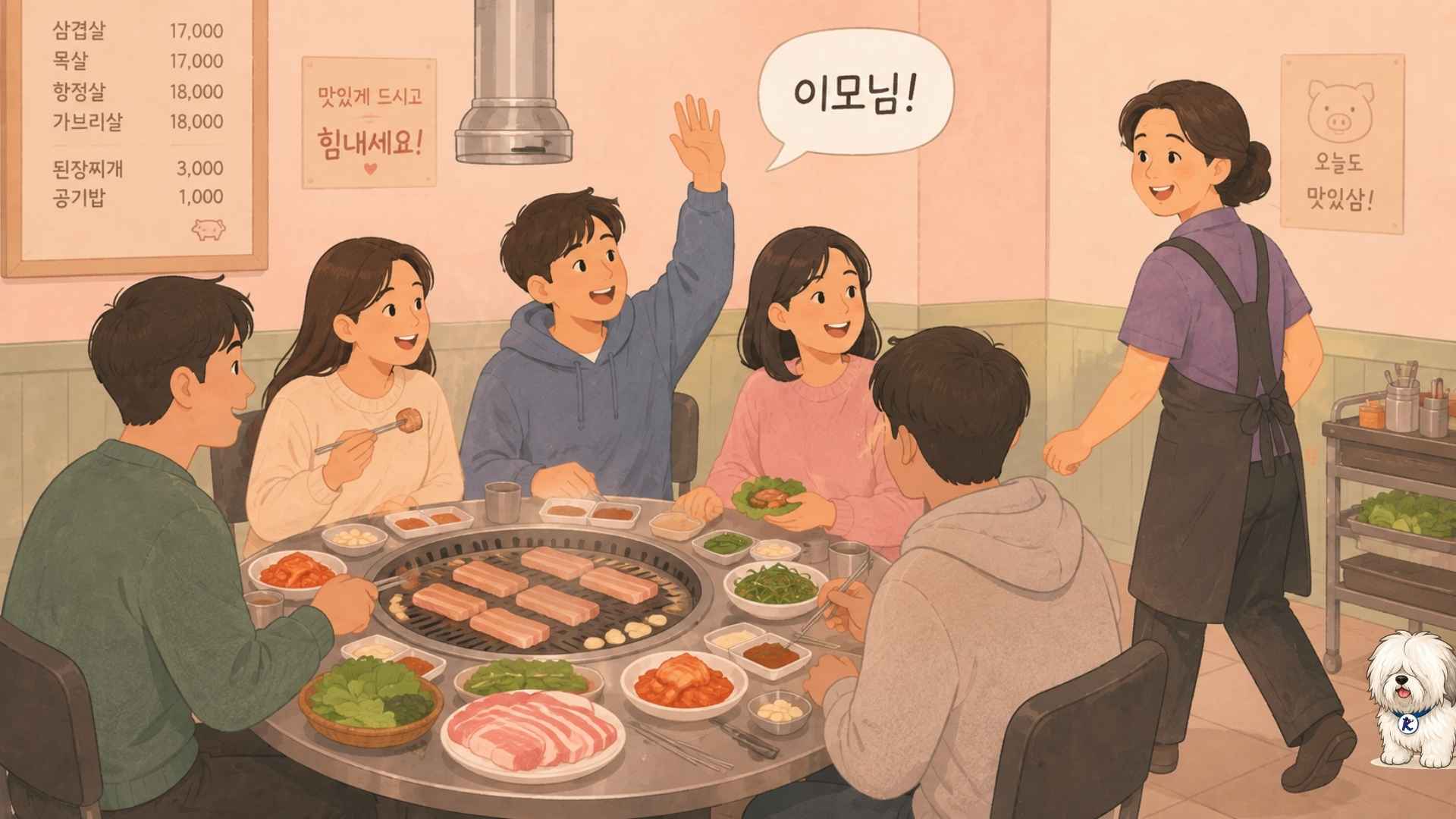
“이모님, 여기 물 좀 주세요!” (imo-nim, yeogi mul jom ju-se-yo) — “Auntie, could I get some water here!”
Wait — the restaurant owner is her aunt? No. The restaurant lady is not the customer’s real aunt. They just met today, for the first time.
Huh?! So if she’s not a real aunt, why call her “이모 (imo)” — aunt? That’s today’s story.
Koreans love a good “calling word” (호칭)
When Koreans get close, they often use a calling word (호칭, ho-ching) instead of your name — words like:
“언니 (eonni),” “오빠 (oppa),” “형 (hyeong)”
Why?
In Korea, calling someone by a family word means: “You feel as close to me as family.” It holds a warmer feeling than calling someone “○○ 씨 (ssi),” which is like adding “Mr.” or “Ms.” to a name.
오빠, 형, 언니, 누나
But here, age matters too. You don’t use these words for just anyone. Among people who have become close, you call someone a little older than you like this:
- A woman → an older man: 오빠 (oppa)
- A man → an older man: 형 (hyeong)
- A woman → an older woman: 언니 (eonni)
- A man → an older woman: 누나 (nuna)
In dramas, you’ll easily see a younger coworker say to a close senior, “형 (hyeong), let’s have lunch together today,” or a student say to an older friend, “언니 (eonni), how do I do this?”
And the most famous drama scene of all: a woman calling her boyfriend “오빠~ (oppa).” When a couple is dating and the man is older, the woman often calls him “오빠(oppa).” In English you might say “baby” — in Korea it’s “oppa~.” Kind of fun, isn’t it?
이모, 삼촌
So these words are only for close people? Actually, no. Sometimes Koreans use family words even for someone they’ve just met.
- A lady working at a restaurant → 이모 (imo) — aunt
- A man at a market or shop → 삼촌 (samchon) — uncle, or 아저씨 (ajeossi) — mister
“이모 (imo)” originally means your mother’s sister. But at a restaurant, people call an unknown lady “이모~.” Why? Because calling her that makes things feel a little closer and warmer. It’s a kind way of saying: “I won’t treat you like a stranger.”
This is all “jeong (정)”
오빠(oppa), 언니(eonni), 이모(imo), 삼촌(samchon) — do you see what these words have in common? They are all family words. And yet Koreans use them even for people who are not family.
This Korean calling word culture coming from jeong (정) — a warm closeness that makes you treat others like family. Calling someone by name is nice, too. But calling them by a family word makes the space between you a little warmer.
A few things to be careful about
Still, you can’t use these words with just anyone, anytime.
- Suddenly calling someone you just met “오빠(oppa)” or “언니(eonni)” → can feel like too much
- Calling a young café worker “이모(imo)” or “삼촌(samchon)” → feels awkward
- Especially “오빠(oppa)” can carry a special (romantic) feeling, so be careful with people you don’t know well
If you’re not sure, start with “저기요 (jeogi-yo)” — “excuse me” — or “○○ 씨 (ssi).” Once you’ve become close, you can naturally move on to “언니” or “오빠.”
One last thing
Quite a few foreigners tell me that Koreans seem a little scary at first. In Korea, there isn’t really a culture of smiling and saying “Hi” to strangers on the street. If anything, people try not to make eye contact with strangers — staring is considered rude.
But once you break the ice and start a relationship, it can grow into one where you share 정(jeong).
(I’ll talk more about 정(jeong) another time.)
So in Korea, if someone calls you “언니(eonni)~” or “형(hyeong)~,” don’t be surprised. It’s a warm little signal that says, “We’re close now.” By using a family word instead of your name, they’re quietly closing the distance between your hearts.
And if there’s someone you’d like to get closer to — try speaking first. You can even ask: “‘언니’라고 불러도 돼요?” (eonni-rago bulleo-do dwae-yo? — “Can I call you eonni?”)
Does your language have words that call non-family members like family? Tell me in the comments. I’d love to know!
📝 Just remember this
| Calling word | For this kind of person |
|---|---|
| 오빠 (oppa) / 형 (hyeong) | A close, older man (a boyfriend can be “오빠” too) |
| 언니 (eonni) / 누나 (nuna) | A close, older woman |
| 이모 (imo) | A friendly restaurant lady |
| 삼촌 (samchon) / 아저씨 (ajeossi) | A friendly man at a market or shop |
One-line takeaway: Koreans call close people by family words — it’s one way of sharing “jeong.”
well done! If you enjoyed this post, you’ll love my next one too! See you again soon!
Read more 👉 Why Does Korean "Hello" Have a Question Mark?
<Latest Posts>