Welcome to DAY 6 of our TOPIK II series! Today, we will focus on essential Health Vocabulary to help you pass the TOPIK II exam.
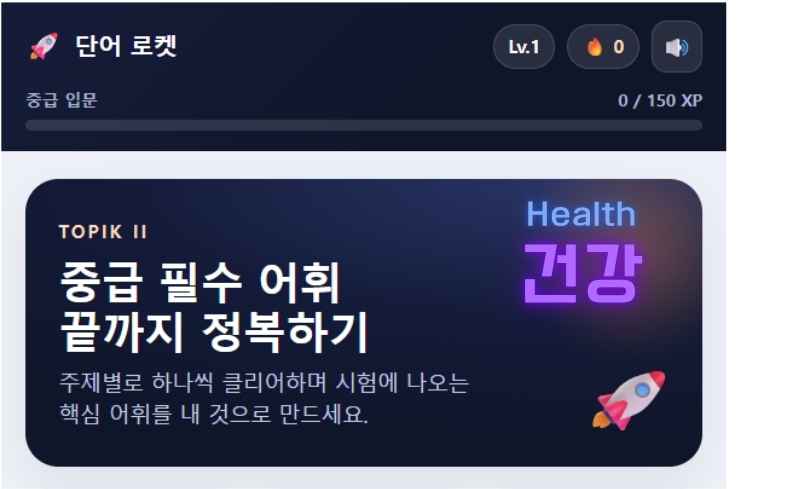
First, try the vocabulary game above. If you miss some words, check the word list [내 단어장] and example sentences again.
Click 오늘의 학습 시작 🚀
중급 필수 어휘
끝까지 정복하기
주제별로 하나씩 클리어하며 시험에 나오는 핵심 어휘를 내 것으로 만드세요.
🚀🎉 쇼핑 클리어!
🔎 한국어로 공부하고 싶어요? 👉 [ TOPIK II 필수 어휘 ② 인간관계·감정 ]
Essential TOPIK II Health Vocabulary
| 단어 | English | 쉬운 한국어 풀이 | 예문 |
|---|---|---|---|
| 내쉬다 | exhale | 숨을 몸 밖으로 내보내다 | 팔을 높이 들며 숨을 크게 내쉬다. (Raise your arms high and breathe out deeply.) |
| 노화 | aging | 나이가 들어서 몸이 늙어 가는 것 | 노화는 막을 수 없다. (We cannot stop aging.) |
| 멍들다 | get a bruise | 부딪혀서 피부 밑에 피가 고여 퍼렇게 되다 | 넘어지는 바람에 무릎에 퍼렇게 멍이 들었다. (Because I fell, I got a blue bruise on my knee.) |
| 성인병 | adult disease | 어른들이 주로 걸리는 몸의 병 (고혈압, 당뇨 등) | 성인병은 각종 합병증을 유발할 수 있어 위험하다. (Adult diseases are dangerous because they can cause various complications.) |
| 시리다 | ache; sensitive | 몸의 일부가 차가워서 아프거나 시린 느낌이 들다 | 이가 시리면 가능한 한 빨리 치과에 가는 것이 좋다. (If your teeth are sensitive, it is good to go to the dentist as soon as possible.) |
| 악화 | deteriorate; worsen | 일이나 건강 상태가 이전보다 더 나빠지는 것 | 증상이 악화되지 않도록 식단을 관리해야 한다. (We must manage our diet so that symptoms do not get worse.) |
| 알레르기 | allergy | 특정 음식이나 먼지 때문에 몸이 가렵거나 기침이 나는 반응 | 알레르기 반응이 심하면 호흡이 곤란해진다. (If the allergic reaction is severe, breathing becomes difficult.) |
| 앓다 | be sick | 몸이나 마음에 병이 생겨 아프고 고통을 느끼다 | 마음의 병을 앓을 때 상담을 받아 보는 것이 좋다. (It is good to get counseling when you suffer from an illness of the mind.) |
| 어지럽다 | dizzy | 머리가 빙빙 도는 느낌이 나고 서 있기 힘들다 | 갑자기 일어섰더니 어지러웠다. (When I stood up suddenly, I felt dizzy.) |
| 위급하다 | urgent | 상황이 매우 급하고 위험하다 | 중환자실은 상태가 위급한 환자가 가는 곳이다. (The intensive care unit is where patients in urgent conditions go.) |
| 위독하다 | critical | 병이 아주 깊어져서 목숨이 위험한 상태이다 | 친구 어머니의 병세가 위독하여 걱정이 된다. (I am worried because my friend’s mother is in critical condition.) |
| 장기 | organ | 심장, 위, 간처럼 몸 안에서 특별한 일을 하는 기관 | 가공식품은 장기에 지방이 많이 쌓이게 만든다. (Processed foods cause a lot of fat to accumulate in the organs.) |
| 전염 | infection | 병이 다른 사람에게 옮아가는 것 | 코로나 바이러스 감염증은 사람의 침 등으로 전염이 되는 질병이다. (COVID-19 is a disease transmitted through people’s saliva.) |
| 접종 | vaccination | 병에 걸리지 않으려고 미리 주사(백신)를 맞는 것 | 겨울이 되면 독감 예방 주사 접종을 합니다. (When winter comes, we get a flu vaccination.) |
| 지치다 | be exhausted | 힘든 일을 많이 해서 힘이 하나도 없다 | 지치고 피곤할 때는 스트레칭으로 건강을 관리한다. (When exhausted and tired, manage your health with stretching.) |
| 진료 | to see a doctor | 의사가 환자를 보고 아픈 곳을 확인하며 치료하는 일 | 우리 병원은 평일 야간에도 진료를 합니다. (Our hospital also provides medical treatment at night on weekdays.) |
| 체질 | constitution | 태어날 때부터 가지고 있는 몸의 성질이나 건강 상태 | 체질에 맞는 음식을 섭취하는 것이 몸에 이롭다. (Eating food that fits your body constitution is beneficial to your health.) |
| 치료하다 | treat | 병이나 다친 상처를 고치다 | 암을 치료하는 신약이 개발되었다는 소식입니다. (This is news that a new drug to treat cancer has been developed.) |
| 칼로리 | calorie | 음식이 몸 안에서 만드는 에너지의 양 | 성인은 하루에 2,000칼로리 정도를 섭취하면 적절하다. (It is appropriate for an adult to consume about 2,000 calories a day.) |
| 해롭다 | harmful | 몸이나 마음에 나쁜 영향을 주어 나쁘다 (이롭다의 반대) | 흡연은 건강에 해로우므로 금연을 권장합니다. (Smoking is harmful to health, so quitting smoking is recommended.) |
Some Words Look Similar
위급하다 and 위독하다 are similar, but they are not the same.
- 위급하다 means the situation is very urgent and dangerous.
- 위독하다 means a person is very sick and their life may be in danger.
- 환자의 상태가 위급하다.
- 환자의 병세가 위독하다.
(The patient is in a critical condition.)
Also remember 악화.
악화 means a condition becomes worse.
증상이 악화되다
→ The symptoms get worse.
Learn Words Together 💡
It is easier to remember health words in small groups.
- 병을 앓다
- 증상이 악화되다
- 예방 접종을 하다
- 병원에서 진료를 받다
- 병을 치료하다
- 건강에 해롭다
- 알레르기 반응이 나타나다
Also, 진료 and 치료 are different.
- 진료 means a doctor checks a patient and gives medical care.
- 치료 means making a sickness or injury better.
💡Here is one small tip!
One of today’s words, 장기, has more than one meaning. In this lesson, 장기 means an organ inside the body, such as the heart, stomach, or liver. But the same word can also mean long-term (as in 장기간), or even a traditional board game called janggi (Korean chess). So when you read 장기, look at the whole sentence to find the correct meaning. In the game below, each word comes with an example sentence, so the meaning becomes clear and easy to remember.
Try the Game Again! 🚀
Think about the situation before you choose the word.
- The sickness gets worse. → 악화
- You see a doctor at a hospital. → 진료
- You make the sickness better. → 치료하다
If you can understand these differences, you learned the most important points of DAY 6.
Check the words you missed in [내 단어장] and try the game one more time!
🔎 Learn more about TOPIK Ⅱ writing 👉 [ TOPIK writing ]
<Latest Posts>