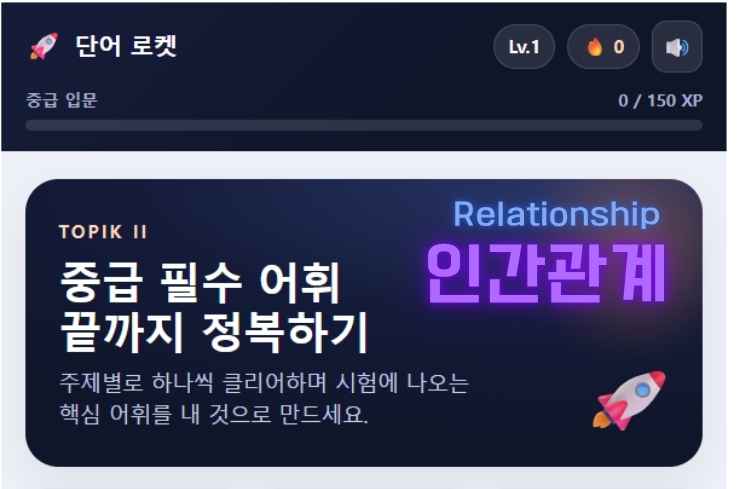
Practice essential TOPIK II relationship words & emotions vocabulary with this interactive Korean word game. Build your vocabulary skills for the official exam through topic-based practice!
Click 오늘의 학습 시작 🚀
중급 필수 어휘
끝까지 정복하기
주제별로 하나씩 클리어하며 시험에 나오는 핵심 어휘를 내 것으로 만드세요.
🚀🎉 쇼핑 클리어!
🔎 한국어로 공부하고 싶어요? 👉 [ TOPIK II 필수 어휘 ② 인간관계·감정 ]
Master Essential TOPIK II Relationship Words
| 단어 | English meaning | 쉬운 한국어 풀이 | 예문 (Example Sentence) |
|---|---|---|---|
| 감사 | thanks; gratitude | 고마워하는 마음이나 고맙다고 말하는 일 | 감사의 마음을 전했다. 감사의 마음을 전했다. (I expressed my gratitude.) |
| 다니다 | go to; attend | 학교나 회사 등에 공부나 일을 하러 계속 가다 | 친구와 음악 학원에 다니며 악기를 배웠다. (I attended a music academy with a friend and learned an instrument.) |
| 답장 | reply | 받은 메일이나 편지에 대답을 쓰는 일 | 보낸 사람에게 답장을 쓰다. (Write a reply to the sender.) |
| 도와주다 | help | 다른 사람의 일을 쉽고 편하게 힘을 보태 주다 | 도움을 받은 만큼 다른 사람을 도와주어야 한다. (You should help others as much as you have been helped.) |
| 돕다 | help | 힘들거나 어려운 상황에 처한 사람을 보살피다 | 어려운 일이 있는 이웃을 돕다. (Help neighbors who are in trouble.) |
| 만나다 | meet | 다른 사람과 약속을 해서 직접 얼굴을 보다 | 새로운 사람과 만나 관계를 형성하다. (Meet new people and build relationships.) |
| 맞이하다 | welcome; greet | 새로 오는 사람이나 손님을 반갑게 받다 | 동아리에 새로 들어온 회원을 맞이하다. (Welcome new members who joined the club.) |
| 메일 | 인터넷(컴퓨터나 핸드폰)으로 주고받는 편지 | 메일을 보냈으니 확인 부탁드립니다. (I sent an email, so please check it.) | |
| 미루다 | postpone; delay | 해야 할 일이나 약속의 시간, 날짜를 뒤로 바꾸다 | 부모님과의 식사 약속을 미루고 후배를 만났다. (I postponed dinner with my parents and met a junior.) |
| 반갑다 | glad to see | 보고 싶었던 사람을 만나서 마음이 기쁘다 | 오랜만에 가족들과 만나니 반가웠다. (I was glad to meet my family after a long time.) |
| 방문 | visit | 다른 사람을 만나거나 구경하기 위해 찾아감 | 방문하기 전에 미리 연락을 주시기 바랍니다. (Please contact us in advance before visiting.) |
| 배웅하다 | see someone off | 떠나는 사람을 배웅하거나 인사하며 보내다 | 고향에 돌아가는 친구를 공항에서 배웅했다. (I saw off my friend at the airport who was returning home.) |
| 소식 | news | 다른 사람의 이야기나 세상에 대한 이야기 | 친구의 결혼 소식을 들었다. (I heard the news of my friend’s marriage.) |
| 약속 | promise; plan; appointment | 다른 사람과 만날 시간과 장소를 정하는 것 | 일정이 변경되어 약속을 지킬 수 없다. (I cannot keep the appointment because the schedule changed.) |
| 연락 | contact | 전화, 메일, 편지 등으로 소식을 전하는 일 | 연락도 없이 약속 시간에 늦어서 친구에게 사과했다. (I apologized to my friend for being late without contacting them.) |
| 죄송하다 | be sorry | 미안하고 미안해서 마음이 아프고 나쁘다 | 진심으로 죄송하다는 사과의 말씀을 드립니다. (I sincerely apologize and offer my regrets.) |
| 집들이 | housewarming | 새 집으로 이사를 하고 친구나 가족을 부르는 잔치 | 집들이에 갈 때는 보통 휴지나 세제를 선물로 사 간다. (When going to a housewarming party, people usually buy toilet paper or detergent as a gift.) |
| 찾아가다 | visit; go to see | 어떤 사람이나 장소를 직접 만나러 가다 | 최근에 이사한 직장 동료의 집을 찾아갔다. (I visited a coworker’s house who recently moved.) |
| 초대 | invitation | 다른 사람에게 잔치나 모임에 오라고 부르는 일 | 생일 파티에 초대를 받았다. (I was invited to a birthday party.) |
| 취소 | cancellation; cancel | 하기로 약속했던 일이나 예약을 하지 않기로 정함 | 영화를 예매했지만 못 가게 되어 결국 취소했다. (I reserved a movie ticket, but I couldn’t go, so I eventually canceled it.) |
Learn the Words Together
Some words are easier when you learn them as one situation.
For example:
약속을 하다 → 연락하다 → 만나다
You make a 약속, contact your friend, and then 만나다.
But sometimes your plan changes.
- 약속을 미루다 → You will meet later.
- 약속을 취소하다 → You will not meet.
This difference is important.
Words That Look Similar
돕다 vs. 도와주다
Both mean “to help.”
돕다 is the basic verb.
- 친구를 돕다
도와주다 has the feeling of doing something for another person.
- 숙제를 도와주다
In many daily situations, Koreans often use 도와주다.
방문 vs. 찾아가다
방문 is a noun.
- 학교를 방문하다
- 한국 방문
찾아가다 is a verb. It means going directly to see a person or place.
- 친구의 집을 찾아가다
TOPIK Study Tip 💡
Try to remember words in small groups:
- 메일을 보내다 → 답장을 받다
- 소식을 듣다 → 연락하다
- 초대를 받다 → 집들이에 가다
- 약속을 하다 → 약속을 미루다 → 약속을 취소하다
- 손님을 맞이하다 → 친구를 배웅하다
TOPIK II often tests words inside a situation. If you know which words are used together, the answer becomes easier to find.
💡 Key Exam Tip for TOPIK II Relationship Vocabulary
In the TOPIK II listening and reading sections, relationship words often appear in daily conversations, formal announcements, and story-based passages. Pay close attention to honorific forms and nuanced verbs such as
맞이하다(to greet) or배웅하다(to send off), as they frequently indicate the specific relationship between speakers.
Keep Practicing for Your TOPIK II Exam! Mastering Relationship Words is essential for getting a high score on the TOPIK II test. Review these vocabulary words daily and test your skills with our interactive word game above.
Good luck with your Korean language studies, and stay tuned for the next vocabulary series! 🚀
🔎 Learn more about TOPIK Ⅱ writing 👉 [ TOPIK writing ]
<Latest Posts>