DAY 8: Work Life Vocabulary – 20 Essential TOPIK II Words

TOPIK II Work Life Vocabulary

안녕하세요? Welcome to DAY 8: TOPIK II Work Life Vocabulary! Work-related words often appear in TOPIK II reading and listening questions.

You do not need to know every word perfectly before you start.

First, play the game and see how many words you already know. Then learn the words you missed in [내 단어장] and try again.

Click 오늘의 학습 시작 🚀

⚠️ Careful! One letter changes everything : 결재 = approval at work / 결제 = payment
단어 로켓 · 직장 생활 DAY 8
🚀단어 로켓
Lv.1 🔥 0
중급 입문0 / 150 XP
TOPIK II

중급 필수 어휘
끝까지 정복하기

주제별로 하나씩 클리어하며 시험에 나오는 핵심 어휘를 내 것으로 만드세요.

🚀
0
마스터한 단어
0
클리어한 주제
0
최고 콤보
✏️
문장 빈칸 채우기
문맥에 맞는 단어 고르기 · TOPIK 유형
🔗
비슷한 말 · 반대말
유의어 · 반의어로 뜻 익히기
📖
뜻풀이 보고 단어 맞히기
쉬운 한국어 설명 + 작은 영어 힌트
주제 목차
TOPIK II 중급 어휘 25개 주제 · 순서대로 정복해 보세요.
0/23
🔥2 콤보! XP 1.5배

🎉 쇼핑 클리어!

모든 단어를 맞혔어요
0%
정확도
0
마스터
0
최고 콤보
+0 XP
내 단어장
틀렸던 단어가 모여요. 복습으로 완전히 내 것으로 만드세요.
🔎 한국어로 공부하고 싶어요? 👉 [ TOPIK II 필수 어휘 ② 인간관계·감정 ]

⭐ TOPIK Must-Know: 결재 vs. 결제

These two words sound almost the same, so they are easy to confuse.

결재 = approval at work

  • 상사에게 결재를 받다
  • 보고서를 결재하다

결제 = payment

  • 카드로 결제하다
  • 온라인으로 결제하다

How can you choose the answer?

Look at the words around the blank.

🏢 회사 · 상사 · 보고서 · 서류 → Think 결재
🏪 카드 · 돈 · 쇼핑 · 주문 → Think 결제

📢 TOPIK Tip: Do not look at only one word. Always check the whole situation.

Master Essential TOPIK II Work Life Vocabulary

단어English쉬운 한국어 풀이예문
결재approval회사에서 결재 서류나 계획에 대해 윗사람에게 허락(승인)을 받는 일결재를 올리기 전에 내용을 검토하다.
(We review the content before submitting it for approval.)
경영management회사나 가게를 계획하고 이끌어 나가는 일 (운영)나의 회사 경영 원칙은 성실과 정직이다.
(My company management principle is sincerity and honesty.)
고려하다consider어떤 일을 결정할 때 여러 가지 상황을 깊이 생각하다예산을 초과할 수 있다는 점을 고려해 주십시오.
(Please consider that we might exceed the budget.)
고용employment돈을 주고 사람을 회사 직원으로 써서 일을 시키는 것경제가 불안정하면 그해의 고용 인원이 줄어든다.
(If the economy is unstable, the number of hired people decreases that year.)
구성원member어떤 조직이나 단체, 모임을 만드는 사람들 (멤버)구성원의 성향을 알면 부족한 부분을 도울 수 있다.
(If you know the members’ personalities, you can help them with what they lack.)
구성하다organize여러 사람이나 부서를 모아서 하나의 팀이나 조직을 만들다새로운 부서를 구성하면서 인사이동이 있었다.
(There was a personnel transfer while organizing the new department.)
권한authority회사나 직책에서 어떤 일을 책임지고 결정할 수 있는 힘이나 권리신입 사원은 상사에 비해 지닌 권한이 적다.
(New employees have less authority compared to their bosses.)
근무work직장에서 맡은 일을 열심히 하는 것우리 회사는 자율 근무 제도를 시행하고 있습니다.
(Our company implements a flexible working hour system.)
기한due date어떤 일을 끝내야 하는 정해진 시간이나 날짜 (마감일)기한 내에 회의 자료를 준비해서 제출하십시오.
(Please prepare and submit the meeting materials within the deadline.)
노사labor-management일하는 노동자(직원)와 일을 시키는 사용자(사장)를 함께 이르는 말노사의 갈등이 좁혀지지 않아 문제가 되고 있다.
(The conflict between labor and management is not narrowing down, causing a problem.)
논의하다discuss어떤 문제에 대해 여러 사람이 서로 의견을 나누며 의논하다논의한 대로 진행하고 그 결과를 보고하십시오.
(Please proceed as discussed and report the results.)
맡기다assign내가 해야 할 일이나 물건을 다른 사람에게 주어 하거나 보관하게 하다중요한 일을 신뢰하는 직원에게 맡기다.
(I assign important work to an employee I trust.)
사원employee회사에서 일하는 모든 직원신입 사원에게 보고 절차를 교육하다.
(We train new employees on reporting procedures.)
수정하다correct글이나 보고서, 계획에서 잘못되거나 부족한 부분을 고치다수정한 사항이 반영되지 않았으니 확인 바랍니다.
(The corrected parts are not reflected, so please check.)
수행하다perform계획하거나 회사에서 맡은 임무나 일을 실제로 해내다비서의 업무를 수행하다 보면 힘들 때가 있다.
(There are times when it is hard to perform secretarial duties.)
승진하다be promoted회사에서 직위(직급)가 더 높은 자리로 올라가다승진을 하면 일반적으로 급여가 상승한다.
(When you get promoted, your salary generally increases.)
인정받다be recognized회사나 상사에게 나의 가치나 능력이 훌륭하다고 평가받다회사에서 인정받는 직원이 되려고 노력 중이다.
(I am trying to be an employee who is recognized at the company.)
전략적strategic목표를 효과적으로 이루기 위해 머리를 써서 정밀하게 계획을 세우는 것전략적 마케팅으로 신제품 완판을 달성했다.
(We achieved a complete sell-out of the new product through strategic marketing.)
협력하다cooperate하나의 목표나 프로젝트를 위해 힘을 합쳐서 같이 일하다사회생활을 할 때 동료와 협력하지 않으면 곤란하다.
(In social life, it is difficult if you do not cooperate with your colleagues.)
협의하다discuss with어떤 일을 조화롭게 결정하기 위해 다른 사람이나 부서와 타협하며 이야기하다다른 부서와 협의하여 일을 마무리하겠습니다.
(I will finish the work after discussing it with other departments.)

Who Does the Work?

Another useful pair is 맡기다 and 수행하다.

맡기다 → give a job or task to another person

  • 팀장이 직원에게 중요한 일을 맡겼다.

수행하다 → do the job or task

  • 직원은 맡은 업무를 잘 수행했다.

Think of it like this:

A가 B에게 일을 맡기다 → B가 일을 수행하다

This sentence pattern can help you remember both words together.

Three Words for Working with People

논의하다 · 협의하다 · 협력하다

They may look similar in a TOPIK question.

  • 논의하다 → talk about an idea or problem together
  • 협의하다 → talk together to make a decision
  • 협력하다 → work together for the same goal

Remember the flow:

문제를 논의하다 → 다른 부서와 협의하다 → 함께 협력하다

Learn These TOPIK Word Groups

Try to remember the whole expression, not only one word.

  • 결재를 받다
  • 기한을 지키다
  • 업무를 맡기다
  • 업무를 수행하다
  • 회의에서 논의하다
  • 다른 부서와 협의하다
  • 동료와 협력하다
  • 회사에서 인정받다
  • 승진하다

When these expressions appear in a long TOPIK sentence, you can understand the meaning faster.

🎯 Before You Play Again

Can you answer these four?

  1. You pay by credit card. → 결제
  2. Your manager approves a report. → 결재
  3. You give a task to another employee. → 맡기다
  4. You do the task you received. → 수행하다

If you got even one more answer right than before, you are improving.

Go back to the game and try DAY 8 again.
Your goal is not perfection. Your goal is one more correct answer than last time.

Questions are always welcome in the comments! 🥰 화이팅!

🔎 Learn more about TOPIK Ⅱ writing 👉 [ TOPIK writing ]


<Latest Posts>
DAY 7: Politics Vocabulary – 20 Essential TOPIK II Words

TOPIK Politics Vocabulary

Welcome to DAY 7! Today’s topic is essential Politics Vocabulary for the TOPIK II exam. Politics-related vocabulary is a bit difficult, but if you want to improve your score, it’s definitely good to know it.

First, try the vocabulary game. Then check the [내 단어장] you missed.

Click 오늘의 학습 시작 🚀

단어 로켓 · 정치 DAY 7
🚀단어 로켓
Lv.1 🔥 0
중급 입문0 / 150 XP
TOPIK II

중급 필수 어휘
끝까지 정복하기

주제별로 하나씩 클리어하며 시험에 나오는 핵심 어휘를 내 것으로 만드세요.

🚀
0
마스터한 단어
0
클리어한 주제
0
최고 콤보
✏️
문장 빈칸 채우기
문맥에 맞는 단어 고르기 · TOPIK 유형
🔗
비슷한 말 · 반대말
유의어 · 반의어로 뜻 익히기
📖
뜻풀이 보고 단어 맞히기
쉬운 한국어 설명 + 작은 영어 힌트
주제 목차
TOPIK II 중급 어휘 25개 주제 · 순서대로 정복해 보세요.
0/23
🔥2 콤보! XP 1.5배

🎉 쇼핑 클리어!

모든 단어를 맞혔어요
0%
정확도
0
마스터
0
최고 콤보
+0 XP
내 단어장
틀렸던 단어가 모여요. 복습으로 완전히 내 것으로 만드세요.
🔎 한국어로 공부하고 싶어요? 👉 [ TOPIK II 필수 어휘 ② 인간관계·감정 ]

Master Essential TOPIK II Politics Vocabulary

Do not memorize only the English meaning. Try to understand who does the action and in what situation the word is used.

단어English쉬운 한국어 풀이예문
각계각층all walks of life사회의 모든 다른 분야나 여러 신분의 사람들각계각층의 인사들이 동참하고 있습니다.
(People from all walks of life are participating.)
강화reinforcement힘이나 세력을 더 강하고 튼튼하게 만드는 것경쟁력을 강화하려면 제도를 개선해야 합니다.
(To strengthen competitiveness, we need to improve the system.)
경쟁하다compete이기거나 앞서기 위해 서로 겨루고 싸우다다른 정당과 경쟁하는 과정에서 다툼이 발생했다.
(A dispute occurred during the process of competing with other political parties.)
공정fairness어느 한쪽으로 치우치지 않고 올바르고 똑바름공직자에게 무엇보다 중요한 덕목은 공정이다.
(The most important virtue for a public official is fairness.)
과반수majority전체에서 반(50%)이 넘는 수과반수의 인원이 반대하여 계획이 취소되었다.
(The plan was canceled because the majority of people opposed it.)
대응하다respond어떤 일이나 변화에 알맞게 맞서서 행동하다잘못된 보도에 기자 회견으로 대응하다.
(We respond to false reports with a press conference.)
민주화democratization정치나 사회를 국민이 주인이 되는 상태로 만드는 것민주화를 이루어 낸 것은 정치적으로 의미가 있다.
(Achieving democratization is politically meaningful.)
백성subjects옛날에 왕이 다스리던 나라의 일반 국민왕은 백성의 어려움을 해결해 주고자 했다.
(The king wanted to solve the difficulties of his people.)
보수적conservative새로운 변화보다 옛날부터 내려오는 전통이나 제도를 지키려는 것보수적인 정치로 장년층의 인기를 끌고 있다.
(It is gaining popularity among older people with conservative politics.)
유권자voter선거에서 투표를 할 수 있는 권리를 가진 사람유권자에게 투표에 참여할 것을 강하게 권했다.
(We strongly urged voters to participate in voting.)
유세하다campaign선거 후보자가 자신의 생각이나 공약을 유권자들에게 알리다선거 후보자가 유세하는 곳에 유권자들이 몰려들다.
(Voters gathered where the election candidate was campaigning.)
이행하다implement약속이나 계획, 선거 공약 등을 실제로 행동으로 지키다이행하지 못할 공약을 내세워서는 안 된다.
(You should not make campaign pledges that you cannot fulfill.)
정복하다conquer다른 나라나 영토를 힘으로 싸워 이겨서 자기 것으로 만들다정복한 곳에서 원주민과 영토 분쟁이 있었다.
(There was a land dispute with the native people in the conquered place.)
중립neutrality어느 한쪽 편을 들지 않고 중간의 입장을 지키는 것여전히 중립을 유지하는 국회 의원들이 있다.
(There are still members of National Assembly who remain neutral.)
지배하다rule권력이나 힘을 가지고 사람이나 사회를 다스리다사회를 지배하는 시대정신을 파악해야 한다.
(We must understand the spirit of the times that rules society.)
지지하다endorse어떤 사람이나 의견이 맞다고 생각하여 돕거나 찬성하다지지하는 국회 의원에게 정치 후원금을 보내다.
(I send political donations to the member of National Assembly I support.)
진보적progressive전통을 지키기보다 사회를 새롭고 더 나은 방향으로 바꾸려는 성향진보적인 정치인과 보수적인 정치인이 다투다.
(Progressive politicians and conservative politicians are arguing.)
추진하다push ahead어떤 목표를 향해 일을 밀고 나가며 실행하다이 일을 추진할 때의 장단점을 고려할 것이다.
(I will consider the pros and cons of pushing ahead with this work.)
출마하다run for선거에서 후보자로 나서다대통령 선거에 출마하려면 재산을 공개해야 한다.
(To run for the presidential election, one must disclose their assets.)
투표하다vote선거에서 마음에 드는 사람이나 의견에 표를 던져 선택하다투표하는 장소는 동네의 공공 기관들입니다.
(The places to vote are public institutions in the neighborhood.)

Learn Words by Situation

Politics words are easier when you learn them in groups.

Election Words

유권자 · 유세하다 · 출마하다 · 투표하다
  • A person 출마하다 in an election.
  • The candidate 유세하다 and meets 유권자.
  • Then voters 투표하다.

This is a useful order to remember.

Support and Opinion

지지하다 · 중립 · 보수적 · 진보적
  • 지지하다 means to support a person or idea.
  • 중립 means not taking one side.
  • 보수적 and 진보적 show different ways of thinking about social or political change.

You do not need to agree with the idea. Just understand the meaning of the word in the sentence.

Words You Should Not Confuse

이행하다 vs. 추진하다

이행하다 means to carry out something that was promised or planned.

  • 공약을 이행하다
    (carry out a campaign promise)

추진하다 means to move a plan or project forward.

  • 새로운 정책을 추진하다
    (push forward a new policy)

강화 vs. 대응하다

강화 means making something stronger.

  • 경쟁력을 강화하다

대응하다 means taking action when something happens.

  • 문제에 대응하다

TOPIK Study Tip 💡

Learn short word groups, not single words.

  • 과반수를 얻다
  • 공정을 지키다
  • 유권자에게 지지를 받다
  • 선거에 출마하다
  • 유세를 하다
  • 투표에 참여하다
  • 공약을 이행하다
  • 정책을 추진하다
  • 경쟁력을 강화하다

TOPIK questions often use these words inside a longer sentence. If you know the words that often appear together, you can understand the sentence faster.

Try the DAY 7 Quiz Again! 🚀

Think about these situations:

  • A person becomes a candidate. → 출마하다
  • A candidate talks to voters. → 유세하다
  • People choose a candidate. → 투표하다
  • A politician keeps a campaign promise. → 이행하다

If you can understand these differences, you learned the key points of DAY 7. Now check the words you missed in [내 단어장] and try the game one more time!

Questions are always welcome in the comments below! 🥰

🔎 Learn more about TOPIK Ⅱ writing 👉 [ TOPIK writing ]


<Latest Posts>

DAY 5: Art Vocabulary – 20 Essential TOPIK II Words

art vocabulary

Mastering essential TOPIK II Art Vocabulary will boost your exam score!

Do you enjoy movies, music, books, exhibitions, or musicals?

In DAY 5 of our 25-Day TOPIK II Vocabulary Challenge, you will learn 20 important Korean words about art, literature, performances, and creative works. These words can appear in TOPIK II reading and listening questions about exhibitions, performances, books, artists, and reviews.

First, try the vocabulary game above. Then come back and review the words you missed in 내 단어장.

Click 오늘의 학습 시작 🚀

단어 로켓 · 예술 DAY 5
🚀단어 로켓
Lv.1 🔥 0
중급 입문0 / 150 XP
TOPIK II

중급 필수 어휘
끝까지 정복하기

주제별로 하나씩 클리어하며 시험에 나오는 핵심 어휘를 내 것으로 만드세요.

🚀
0
마스터한 단어
0
클리어한 주제
0
최고 콤보
✏️
문장 빈칸 채우기
문맥에 맞는 단어 고르기 · TOPIK 유형
🔗
비슷한 말 · 반대말
유의어 · 반의어로 뜻 익히기
📖
뜻풀이 보고 단어 맞히기
쉬운 한국어 설명 + 작은 영어 힌트
주제 목차
TOPIK II 중급 어휘 25개 주제 · 순서대로 정복해 보세요.
0/23
🔥2 콤보! XP 1.5배

🎉 쇼핑 클리어!

모든 단어를 맞혔어요
0%
정확도
0
마스터
0
최고 콤보
+0 XP
내 단어장
틀렸던 단어가 모여요. 복습으로 완전히 내 것으로 만드세요.

🔎 한국어로 공부하고 싶어요? 👉 [ TOPIK II 필수 어휘 ② 인간관계·감정 ]

Master Essential TOPIK II Art Vocabulary

This time, pay attention to one important question: Is the word about creating art, seeing art, or describing your feeling about art?

That will make the words much easier to remember.

단어English쉬운 한국어 풀이예문
감동하다be moved; be touched아름다운 그림이나 글, 친절한 행동 등을 보고 마음이 깊게 움직이다가사가 담고 있는 의미에 ​감동했다.
(I was moved by the meaning of the song lyrics.)
개최되다be held회의, 모임, 전시회, 대회 등의 행사가 열리다동양화 전시가 한 달 동안 ​개최된다.
(An exhibition of traditional Asian paintings will be held for one month.)
고전classic옛날에 만들어졌지만 지금까지 가치가 있고 널리 사랑받는 문학이나 예술 작품고전은 현대의 삶에도 많은 영향을 미친다.
(Classics still have a strong influence on modern life.)
관람viewing; watching영화, 연극, 전시, 운동 경기 등을 직접 가서 보는 것어떤 공연을 ​관람하면 좋을지 고민하고 있다.
(I am thinking about which performance to watch.)
글쓴이writer; author글이나 책을 직접 쓴 사람글쓴이는 행복의 기준이 사람마다 다름을 강조하였다.
(The writer stressed that each person has a different idea of happiness.)
등장인물character영화, 소설, 연극, 드라마 등에 나오는 사람등장인물은 무대 한복판에서 독백을 이어 갔다.
(The character continued speaking alone in the middle of the stage.)
문학literature시, 소설, 수필처럼 사람의 생각과 감정을 글로 표현하는 예술문학 작품에는 시, 소설, 수필 등의 장르가 있다.
(Literary works include poetry, novels, and essays.)
뮤지컬musical배우들이 노래, 춤, 연기를 함께 보여 주는 무대 공연뮤지컬은 노래와 춤, 연기가 함께 있는 공연 예술이다.
(A musical is a performance that includes songs, dance, and acting.)
비극적이다tragic매우 슬프고 불행한 일이 일어나 마음이 아픈 느낌이 들다셰익스피어는 비극적인 이야기를 쓰기도 했다.
(Shakespeare also wrote tragic stories.)
생동감liveliness; sense of life진짜 살아 움직이는 것처럼 활기차게 느껴지는 느낌그림에 생동감이 있어서 실제 모습처럼 느껴진다.
(The painting feels very real because it is full of life.)
섬세하다delicate; detailed아주 작고 세밀한 부분까지 꼼꼼하고 자세하다화가는 옷의 무늬까지 섬세하게 표현했다.
(The artist showed even the patterns on the clothes in great detail.)
손꼽다consider one of the best여러 사람이나 것 중에서 특별히 뛰어나다고 생각하다많은 사람들이 이 영화를 올해 최고의 작품으로 손꼽는다.
(Many people consider this one of the best movies of the year.)
손꼽히다be considered one of the best여러 사람이나 것 중에서 아주 뛰어나다고 인정받다이 연극은 올해 최고의 작품 중 하나로 손꼽힌다.
(This play is considered one of the best works of the year.)
음악music목소리나 악기 소리를 이용하여 표현하는 예술전통 음악을 배우려는 젊은 사람들이 늘고 있다.
(More young people are learning traditional music.)
응용하다apply; adapt이미 배운 지식이나 기술을 다른 상황에 맞게 바꾸어 사용하다전통 그림의 표현 방법을 현대 디자인에 응용했다.
(The artist applied traditional painting methods to modern design.)
인상적이다impressive; memorable어떤 모습이나 일이 마음에 강하게 남아 오래 기억되다배우가 조용히 우는 장면이 가장 인상적이었다.
(The scene where the actor cried quietly was the most memorable.)
전시exhibition; display사람들이 볼 수 있도록 그림이나 작품 등을 보여 주는 것전시는 8월 1일부터 한 달 동안 이어집니다.
(The exhibition will continue for one month from August 1.)
조각sculpture나무, 돌, 금속 등을 깎거나 다듬어서 만든 미술 작품조각 속에 여러 동물과 식물이 표현되어 있었다.
(Many animals and plants were shown in the sculpture.)
조화롭다harmonious여러 가지가 서로 잘 어울려 자연스럽고 보기 좋다배우들의 연기가 조화로워서 영화에 몰입할 수 있었다.
(The actors worked well together, so I could focus on the movie.)
창작하다create새로운 생각이나 방법으로 작품을 새롭게 만들어 내다새로운 작품을 창작하는 과정은 힘들지만 즐겁다.
(Creating a new work is difficult, but the process is enjoyable.)

Learn the Words by Situation

You do not need to memorize all 20 words separately. Try putting them into three groups.

1. Creating Art

창작하다 · 응용하다 · 문학 · 음악 · 조각

An artist can 창작하다 a new work.
They can also 응용하다 an old idea or technique in a new way.

2. Seeing and Enjoying Art

전시 · 관람 · 개최되다 · 뮤지컬

An exhibition is 개최되다.
You go there and 관람하다 the exhibition.

3. Talking About Your Reaction

감동하다 · 인상적이다 · 생동감 · 섬세하다 · 조화롭다

These words are useful when you describe what you saw, read, or heard.

Learning vocabulary by situation can help you understand TOPIK passages faster.

⚠️ Do Not Confuse These Words

감동하다 vs. 인상적이다

These two words may look similar, but the feeling is different.

감동하다
→ Your heart or emotions are strongly moved.

  • 영화를 보고 감동했다.
    (I was moved by the movie.)

인상적이다
→ Something stays strongly in your memory.

  • 마지막 장면이 인상적이었다.
    (The last scene was memorable.)

Something can be 인상적이다 without making you emotional.


전시 vs. 관람

전시 is something that people can go and see.

  • 미술관에서 사진 전시가 열린다.
    (A photo exhibition is being held at the art museum.)

관람 is the action of going and seeing it.

  • 주말에 사진전을 관람했다.
    (I visited and viewed the photo exhibition on the weekend.)

Think:

전시가 개최되다 → 전시를 관람하다


손꼽다 vs. 손꼽히다

This pair is especially important.

손꼽다
→ Someone considers a person or thing one of the best.

  • 사람들은 이 작품을 최고의 영화로 손꼽는다.

손꼽히다
→ A person or thing is considered one of the best.

  • 이 작품은 최고의 영화로 손꼽힌다.

The meaning is similar, but the sentence structure is different.

TOPIK Study Tip 💡

For TOPIK II, do not memorize only:

  • 개최되다 = be held
  • 관람 = viewing
  • 감동하다 = be moved

Learn the words that often appear together:

  • 전시가 개최되다
  • 공연을 관람하다
  • 작품을 창작하다
  • 기술을 응용하다
  • 감동적인 이야기
  • 인상적인 장면
  • 생동감이 있다
  • 섬세하게 표현하다
  • 최고의 작품으로 손꼽히다

TOPIK questions often give you the situation first and ask you to choose the correct word. If you remember these small word groups, finding the answer becomes much easier.

Can You Remember All 20 Art Words? 🚀

Before you leave, try this:

  • What word means “your heart was deeply moved”?
  • What word means “something stayed strongly in your memory”?
  • And what is the difference between 손꼽다 and 손꼽히다?

If you can answer these questions, you already understand some of the trickiest words from DAY 5. Now go back to the vocabulary game and try again for long-term memory.

Do not worry about getting every answer right the first time. Learn from the words you miss, play again, and build your TOPIK II vocabulary one topic at a time.

See you in DAY 6! 🚀


🔎 Learn more about TOPIK Ⅱ writing 👉 [ TOPIK writing ]


<Latest Posts>
DAY 4: Jobs Vocabulary – 20 Essential TOPIK II Words

Jobs Vocabulary

Are you preparing for TOPIK Level 3 or 4? In DAY 4, you will learn 20 important Korean jobs vocabulary words.

These words often appear in TOPIK reading and listening questions about 채용 (recruitment), 지원하다 (to apply), 경력 (career), and working life.

First, try the vocabulary game above. Then check the words you missed in the chart below. You do not need to memorize everything at once. Try to understand how each word is used in a real situation.

Click 오늘의 학습 시작 🚀

단어 로켓 · 직업 DAY 4
🚀단어 로켓
Lv.1 🔥 0
중급 입문0 / 150 XP
TOPIK II

중급 필수 어휘
끝까지 정복하기

주제별로 하나씩 클리어하며 시험에 나오는 핵심 어휘를 내 것으로 만드세요.

🚀
0
마스터한 단어
0
클리어한 주제
0
최고 콤보
✏️
문장 빈칸 채우기
문맥에 맞는 단어 고르기 · TOPIK 유형
🔗
비슷한 말 · 반대말
유의어 · 반의어로 뜻 익히기
📖
뜻풀이 보고 단어 맞히기
쉬운 한국어 설명 + 작은 영어 힌트
주제 목차
TOPIK II 중급 어휘 25개 주제 · 순서대로 정복해 보세요.
0/23
🔥2 콤보! XP 1.5배

🎉 쇼핑 클리어!

모든 단어를 맞혔어요
0%
정확도
0
마스터
0
최고 콤보
+0 XP
내 단어장
틀렸던 단어가 모여요. 복습으로 완전히 내 것으로 만드세요.

🔎 한국어로 공부하고 싶어요? 👉 [ TOPIK II 필수 어휘 ② 인간관계·감정 ]

Essential TOPIK II Vocabulary: Jobs and Employment

단어English쉬운 한국어 풀이예문
갖추다have; be equipped with필요한 물건, 조건, 능력 등을 모두 준비해서 가지다취업하려면 필요한 자격과 실력을 갖추어야 한다.
(To get a job, you need the right qualifications and skills.)
검사prosecutor범죄 사건을 조사하고 법원에 재판을 요청하는 법률 전문가검사는 범죄 사건을 조사하고 법원에 재판을 요청한다.
(A prosecutor investigates crimes and asks the court to hold a trial.)
경력work experience; career지금까지 어떤 일을 해 온 경험이 회사는 관련 분야에서 2년 이상 경력이 있는 사람을 찾고 있다.
(This company is looking for someone with at least two years of work experience in the field.)
과학자scientist과학을 전문적으로 연구하는 사람그는 새로운 에너지를 연구하는 과학자가 되고 싶어 한다.
(He wants to become a scientist who studies new energy.)
구하다look for; find필요한 일자리나 직장을 찾다졸업 후에 전공과 관련된 직장을 구하고 있다.
(I am looking for a job related to my major after graduation.)
기사driver버스, 택시, 트럭 등의 차를 운전하는 일을 하는 사람택시 기사가 손님을 안전하게 목적지까지 데려다 주었다.
(The taxi driver took the passenger safely to the destination.)
농부farmer농사를 지어 곡식, 채소, 과일 등을 기르는 사람농부들은 날씨를 확인하며 농작물을 관리한다.
(Farmers check the weather and take care of their crops.)
담당하다be in charge of어떤 일을 책임지고 맡아서 하다저는 회사에서 외국인 고객 상담을 담당하고 있다.
(I am in charge of helping foreign customers at my company.)
대기업large company직원과 자본이 많고 규모가 큰 회사많은 취업 준비생이 대기업 채용 공고에 관심을 보인다.
(Many job seekers are interested in job openings at large companies.)
보유하다have; possess물건, 기술, 자격, 능력 등을 가지고 있다이 회사는 다양한 기술을 보유하고 있다.
(This company has many different technologies.)
실직job loss; unemployment다니던 직장을 잃어 일이 없는 상태회사가 문을 닫으면서 많은 직원이 실직했다.
(Many workers lost their jobs when the company closed.)
운영하다run; operate가게, 회사, 기관 등을 관리하며 이끌어 가다그는 작은 식당을 직접 운영하고 있다.
(He runs a small restaurant himself.)
전문성expertise어떤 분야를 잘 알고 일을 잘할 수 있는 전문적인 지식이나 능력이 일을 잘하려면 높은 전문성이 필요하다.
(You need strong professional knowledge and skills to do this job well.)
지원자applicant회사, 학교, 프로그램 등에 들어가려고 신청한 사람이번 채용의 지원자는 모두 100명이 넘는다.
(There are more than 100 applicants for this job.)
지원하다apply회사나 기관에 들어가려고 신청하다저는 한국 회사의 마케팅 직무에 지원했다.
(I applied for a marketing job at a Korean company.)
채용hiring; recruitment회사가 필요한 사람을 골라 직원으로 뽑는 것회사는 다음 달부터 신입 사원 채용을 시작한다.
(The company will start hiring new employees next month.)
추천하다recommend좋다고 생각하는 사람이나 것을 다른 사람에게 소개하다선생님은 제 경력에 맞는 회사를 추천해 주셨다.
(My teacher recommended a company that fits my work experience.)
취직하다get a job직장을 얻어 회사나 기관에서 일을 시작하다졸업 후 전공과 관련된 회사에 취직했다.
(I got a job at a company related to my major after graduation.)
퇴사하다leave a company; quit a job다니던 회사를 그만두고 나오다그는 새로운 일을 시작하기 위해 회사를 퇴사했다.
(He left his company to start a new job.)
파업하다go on strike노동자들이 요구를 알리기 위해 함께 일을 멈추다노동자들은 근무 조건을 바꾸기 위해 파업했다.
(The workers went on strike to change their working conditions.)

Learn the Words as a Job Story

Instead of memorizing each word alone, connect the words to one situation:

채용 공고 → 지원하다 → 지원자 → 취직하다 → 경력을 쌓다

A company announces a 채용.
You 지원하다 and become a 지원자.
If the company chooses you, you 취직하다.
After working for some time, you have more 경력.

This kind of connection can help you remember TOPIK vocabulary for a longer time.

⚠️ Words You Should Not Confuse

검사 and 기사 has more than one meaning.

  • ­­검사 can mean prosecutor (a job in law). But the same word also means a test or an inspection (검사하다).
  • 기사 can mean driver (for example, a bus or taxi driver). But the same word can also mean a news article, or a technical engineer.

In this lesson, 기사 means a driver, as in 택시 기사 or 버스 기사. Always check the words around it.

  • 지원하다 can also mean “to support.”
  • 회사에 지원하다 = to apply to a company
  • 학생을 지원하다 = to support a student

Also remember:

  • 퇴사하다 → You decide to leave your company.
  • 실직하다 → You lose your job.

Understanding the situation is more important than memorizing only the English meaning.

💡Key Exam Tip for TOPIK II Jobs Vocabulary

In the TOPIK II listening and reading sections, jobs vocabulary frequently appears in recruitment announcements, interviews, and workplace stories. Pay close attention to verbs related to employment—such as 지원하다 (to apply), 채용하다 (to hire), and 퇴사하다 (to quit)—as well as nouns like 경력 (work experience) and 전문성 (expertise). Understanding how these words function in sentence contexts will help you answer questions with confidence.

TOPIK Study Tip 💡

TOPIK II often tests vocabulary inside a sentence or a longer passage. You may know the English meaning but still choose the wrong answer if you do not know how the word is used.

When you study a new word, remember one common expression with it:

경력을 쌓다 · 직장을 구하다 · 업무를 담당하다 · 전문성을 갖추다 · 채용 공고 · 회사에 지원하다

Learning words in these small groups will make TOPIK reading much easier.

Ready for Another Round? 🚀

How many DAY 4 words can you remember now? Go back to the vocabulary game and try it one more time for long-term memory.

Do not worry if you make mistakes. Check the [내 단어장] difficult words, understand the example sentence, and try again.

One topic at a time, your TOPIK II vocabulary will keep growing.

See you in DAY 5!


🔎 Learn more about TOPIK Ⅱ writing 👉 [ TOPIK writing ]


<Latest Posts>
DAY 3: Learn 20 Essential TOPIK II Appearance Words

Appearance words

Welcome to DAY 3 of our TOPIK II series! In DAY 3, you will learn 20 important Korean appearance words with clothes, and style.

These words can appear in TOPIK II reading and listening questions. First, play the vocabulary game above. Then review the words you missed with the chart below.

Try not to memorize only the English meaning. Look at the Korean explanation and example sentence too. This will help you understand the word when it appears in a TOPIK question.

Click 오늘의 학습 시작 🚀

단어 로켓 · 외모 DAY 3
🚀단어 로켓
Lv.1 🔥 0
중급 입문0 / 150 XP
TOPIK II

중급 필수 어휘
끝까지 정복하기

주제별로 하나씩 클리어하며 시험에 나오는 핵심 어휘를 내 것으로 만드세요.

🚀
0
마스터한 단어
0
클리어한 주제
0
최고 콤보
✏️
문장 빈칸 채우기
문맥에 맞는 단어 고르기 · TOPIK 유형
🔗
비슷한 말 · 반대말
유의어 · 반의어로 뜻 익히기
📖
뜻풀이 보고 단어 맞히기
쉬운 한국어 설명 + 작은 영어 힌트
주제 목차
TOPIK II 중급 어휘 25개 주제 · 순서대로 정복해 보세요.
0/23
🔥2 콤보! XP 1.5배

🎉 쇼핑 클리어!

모든 단어를 맞혔어요
0%
정확도
0
마스터
0
최고 콤보
+0 XP
내 단어장
틀렸던 단어가 모여요. 복습으로 완전히 내 것으로 만드세요.

🔎 한국어로 공부하고 싶어요? 👉 [ TOPIK II 필수 어휘 ② 인간관계·감정 ]

If you missed any words, open “내 단어장” (My Wordbook) and review them one more time.

Master Essential TOPIK II Appearance Words

단어English쉬운 한국어 풀이예문
갈아입다change clothes입고 있는 옷을 벗고 다른 옷을 입다입고 있던 외출복을 평상복으로 갈아입었다.
(I changed from my outdoor clothes into comfortable clothes.)
건장하다strong; well-built몸이 아주 튼튼하고 크다그는 건장한 육체를 가진 사람이다.
(He has a strong and well-built body.)
겉보기appearance사람이나 사물을 겉으로만 보는 모습겉보기와 달리 그의 성격은 차분하다.
(Unlike his appearance, he has a calm personality.)
곱다beautiful; pretty모양이나 색이 아주 아름답고 예쁘다가을이 되자 산에 단풍이 곱게 물들었다.
(In autumn, the mountain leaves turned beautiful colors.)
꾸미다decorate모양을 더 예쁘고 보기 좋게 만들다새로운 집의 곳곳을 예쁘게 꾸몄다.
(I decorated different parts of my new home beautifully.)
단정하다neat옷차림이나 모습이 아주 깔끔하고 깨끗하다중요한 자리에 갈 때는 옷을 단정하게 입어야 한다.
(You should dress neatly when you go to an important event.)
똑같다exactly the same두 개 이상이 모양이나 크기에서 다른 점이 없다그녀와 그녀의 동생은 쌍둥이처럼 외모가 똑같다.
(She and her younger sister look exactly the same, like twins.)
매력적attractive사람의 마음을 끄는 아름다운 힘이 있다매력적인 사람은 주변인의 관심을 끈다.
(An attractive person gets people’s attention.)
모양shape; form물건이나 사람의 겉모습이나 형태새로 산 구두의 모양이 독특하다.
(The shape of my new shoes is unique.)
복장clothing; attire사람이 입고 있는 옷이나 옷차림직업에 따라 복장이 서로 다르다.
(People wear different clothing depending on their jobs.)
비슷하다similar서로 거의 같거나 조금만 다르다잠수함은 대체로 그 모양이 물고기의 모습과 비슷하다.
(A submarine usually has a shape similar to a fish.)
사이즈size옷이나 신발 등의 크기체형에 맞는 사이즈의 옷을 입어야 한다.
(You should wear clothes in the right size for your body.)
생기liveliness; energy힘차고 건강한 느낌이나 기운좋은 일이 있는지 그의 얼굴에 생기가 있다.
(His face looks full of life, as if something good happened.)
생김새appearance; looks사람이나 사물이 생겨난 모습사람마다 생김새가 다르듯이 생각도 다르다.
(Just as people look different, they also think differently.)
세련되다stylish; sophisticated모습이나 행동이 촌스럽지 않고 아주 멋있다세련된 디자인의 옷들이 진열되어 있다.
(Clothes with stylish designs are on display.)
스타일style옷을 입는 방법이나 개성적인 모양그 가수는 자신만의 독특한 스타일로 옷을 입는다.
(The singer dresses in their own unique style.)
유행trend; fashion많은 사람들이 한동안 아주 좋아하고 따르는 것요즘 짧은 머리 모양이 큰 유행이다.
(Short hairstyles are very popular these days.)
착용wearing모자, 옷, 안경, 안전띠 등을 몸에 쓰거나 입는 것차를 탈 때에는 반드시 안전띠를 ​착용해야 한다.
(You must wear a seat belt when you are in a car.)
평범하다ordinary특별한 것이 없고 보통이다평범한 옷차림의 아저씨가 가게로 들어왔다.
(An ordinary-looking man walked into the store.)
화려하다colorful; fancy색이나 장식이 아주 밝고 예쁘며 눈에 잘 띄다그 가구는 장식이 굉장히 화려하다.
(The furniture has very fancy decorations.)

Learn Similar Words Together

Some appearance words have similar meanings. Learning them together can make them much easier to remember.

건장하다 → 튼튼하다 : Both can describe a strong and healthy body.

곱다 → 아름답다 : Both can mean “beautiful,” but 곱다 is often used for beautiful colors, skin, sounds, or a gentle appearance.

단정하다 → 깔끔하다 : Both describe a neat appearance.

겉보기 → 겉모습 : Both are related to how someone or something looks from the outside.

복장 → 옷차림 : Both describe the clothes a person is wearing.

사이즈 → 크기 : Both tell us how big or small something is.

생김새 → 외모 : Both can describe how a person looks.

⚠️ Do Not Confuse These Words

똑같다 vs. 비슷하다

똑같다 means there is almost no difference.

  • 두 가방의 모양이 똑같다.
    (The two bags look exactly the same.)

비슷하다 means they are almost the same, but there may be some differences.

  • 두 가방의 모양이 비슷하다.
    (The two bags look similar.)

This difference is important in TOPIK questions.

복장 vs. 스타일

복장 means the clothes a person is wearing, especially in a certain situation.

회사 복장 / 작업 복장 / 면접 복장

스타일 is more about a person’s own way of dressing or looking.

자신만의 스타일 / 독특한 스타일

단정하다 · 세련되다 · 화려하다

These words can all describe appearance, but they are not the same.

단정하다 → clean and neat
세련되다 → stylish and modern
화려하다 → bright, colorful, or highly decorated

TOPIK Vocabulary Tip 💡

Do not study only: 단정하다 = neat

Study a short expression too:

  • 단정하게 입다
  • 세련된 디자인
  • 화려한 옷
  • 유행을 따르다
  • 안전띠를 착용하다
  • 옷을 갈아입다

TOPIK II usually shows vocabulary inside a sentence or passage. If you learn the words that are commonly used together, you can understand the meaning more quickly.

💡 Key Exam Tip for TOPIK II Appearance Vocabulary

In the TOPIK II listening and reading passages, appearance words are frequently used in descriptive contexts, personal profiles, and fashion or lifestyle questions. Pay close attention to action verbs used with clothing and accessories—such as 갈아입다 (to change clothes) or 착용하다 (to wear/put on)—as well as descriptive adjectives like 세련되다 (stylish) and 단정하다 (neat). Recognizing these nuances will help you answer reading comprehension questions much faster.

Ready to Try the Game Again? 🚀

Which words were difficult for you?

Was it 똑같다 vs. 비슷하다?
Or 복장 vs. 스타일?

Go back to the game and try DAY 3 one more time. This time, do not only remember the English meaning. Think about the situation and the words that are often used together.

A few minutes of review can make a big difference.

Keep going—one topic a day, one step closer to your TOPIK goal!


🔎 Learn more about TOPIK Ⅱ writing 👉 [ TOPIK writing ]


<Latest Posts>
DAY 2: Learn 20 Essential TOPIK II Relationship Words

Relationship Words

Practice essential TOPIK II relationship words & emotions vocabulary with this interactive Korean word game. Build your vocabulary skills for the official exam through topic-based practice!

Click 오늘의 학습 시작 🚀

단어 로켓 · 마스터 템플릿
🚀단어 로켓
Lv.1 🔥 0
중급 1단계0 / 150 XP
TOPIK II

중급 필수 어휘
끝까지 정복하기

주제별로 하나씩 클리어하며 시험에 나오는 핵심 어휘를 내 것으로 만드세요.

🚀
0
마스터한 단어
0
클리어한 주제
0
최고 콤보
✏️
문장 빈칸 채우기
문맥에 맞는 단어 고르기 · TOPIK 유형
🔗
비슷한 말 · 반대말
유의어 · 반의어로 뜻 익히기
📖
뜻풀이 보고 단어 맞히기
쉬운 한국어 설명 + 작은 영어 힌트
주제 목차
TOPIK II 중급 어휘 30개 주제 · 순서대로 정복해 보세요.
0/23
🔥2 콤보! XP 1.5배

🎉 쇼핑 클리어!

모든 단어를 맞혔어요
0%
정확도
0
마스터
0
최고 콤보
+0 XP
내 단어장
틀렸던 단어가 모여요. 복습으로 완전히 내 것으로 만드세요.

🔎 한국어로 공부하고 싶어요? 👉 [ TOPIK II 필수 어휘 ② 인간관계·감정 ]

Master Essential TOPIK II Relationship Words

단어English meaning쉬운 한국어 풀이예문 (Example Sentence)
감사thanks; gratitude고마워하는 마음이나 고맙다고 말하는 일감사의 마음을 전했다. 감사의 마음을 전했다.
(I expressed my gratitude.)
다니다go to; attend학교나 회사 등에 공부나 일을 하러 계속 가다친구와 음악 학원에 다니며 악기를 배웠다.
(I attended a music academy with a friend and learned an instrument.)
답장reply받은 메일이나 편지에 대답을 쓰는 일보낸 사람에게 답장을 쓰다.
(Write a reply to the sender.)
도와주다help다른 사람의 일을 쉽고 편하게 힘을 보태 주다도움을 받은 만큼 다른 사람을 도와주어야 한다.
(You should help others as much as you have been helped.)
돕다help힘들거나 어려운 상황에 처한 사람을 보살피다어려운 일이 있는 이웃을 돕다.
(Help neighbors who are in trouble.)
만나다meet다른 사람과 약속을 해서 직접 얼굴을 보다새로운 사람과 만나 관계를 형성하다.
(Meet new people and build relationships.)
맞이하다welcome; greet새로 오는 사람이나 손님을 반갑게 받다동아리에 새로 들어온 회원을 맞이하다.
(Welcome new members who joined the club.)
메일email인터넷(컴퓨터나 핸드폰)으로 주고받는 편지메일을 보냈으니 확인 부탁드립니다.
(I sent an email, so please check it.)
미루다postpone; delay해야 할 일이나 약속의 시간, 날짜를 뒤로 바꾸다부모님과의 식사 약속을 미루고 후배를 만났다.
(I postponed dinner with my parents and met a junior.)
반갑다glad to see보고 싶었던 사람을 만나서 마음이 기쁘다오랜만에 가족들과 만나니 반가웠다.
(I was glad to meet my family after a long time.)
방문visit다른 사람을 만나거나 구경하기 위해 찾아감방문하기 전에 미리 연락을 주시기 바랍니다.
(Please contact us in advance before visiting.)
배웅하다see someone off떠나는 사람을 배웅하거나 인사하며 보내다고향에 돌아가는 친구를 공항에서 배웅했다.
(I saw off my friend at the airport who was returning home.)
소식news다른 사람의 이야기나 세상에 대한 이야기친구의 결혼 소식을 들었다.
(I heard the news of my friend’s marriage.)
약속promise; plan; appointment다른 사람과 만날 시간과 장소를 정하는 것일정이 변경되어 약속을 지킬 수 없다.
(I cannot keep the appointment because the schedule changed.)
연락contact전화, 메일, 편지 등으로 소식을 전하는 일연락도 없이 약속 시간에 늦어서 친구에게 사과했다.
(I apologized to my friend for being late without contacting them.)
죄송하다be sorry미안하고 미안해서 마음이 아프고 나쁘다진심으로 죄송하다는 사과의 말씀을 드립니다.
(I sincerely apologize and offer my regrets.)
집들이housewarming새 집으로 이사를 하고 친구나 가족을 부르는 잔치집들이에 갈 때는 보통 휴지나 세제를 선물로 사 간다.
(When going to a housewarming party, people usually buy toilet paper or detergent as a gift.)
찾아가다visit; go to see어떤 사람이나 장소를 직접 만나러 가다최근에 이사한 직장 동료의 집을 찾아갔다.
(I visited a coworker’s house who recently moved.)
초대invitation다른 사람에게 잔치나 모임에 오라고 부르는 일생일 파티에 초대를 받았다.
(I was invited to a birthday party.)
취소cancellation; cancel하기로 약속했던 일이나 예약을 하지 않기로 정함영화를 예매했지만 못 가게 되어 결국 취소했다.
(I reserved a movie ticket, but I couldn’t go, so I eventually canceled it.)

Learn the Words Together

Some words are easier when you learn them as one situation.

For example:

약속을 하다 → 연락하다 → 만나다

You make a 약속, contact your friend, and then ​만나다.

But sometimes your plan changes.

  • 약속을 미루다 → You will meet later.
  • 약속을 취소하다 → You will not meet.

This difference is important.

Words That Look Similar

돕다 vs. 도와주다

Both mean “to help.”

돕다 is the basic verb.

  • 친구를 돕다

도와주다 has the feeling of doing something for another person.

  • 숙제를 도와주다

In many daily situations, Koreans often use 도와주다.


방문 vs. 찾아가다

방문 is a noun.

  • 학교를 방문하다
  • 한국 방문

찾아가다 is a verb. It means going directly to see a person or place.

  • 친구의 집을 찾아가다

TOPIK Study Tip 💡

Try to remember words in small groups:

  • 메일을 보내다 → 답장을 받다
  • 소식을 듣다 → 연락하다
  • 초대를 받다 → 집들이에 가다
  • 약속을 하다 → 약속을 미루다 → 약속을 취소하다
  • 손님을 맞이하다 → 친구를 배웅하다

TOPIK II often tests words inside a situation. If you know which words are used together, the answer becomes easier to find.

💡 Key Exam Tip for TOPIK II Relationship Vocabulary

In the TOPIK II listening and reading sections, relationship words often appear in daily conversations, formal announcements, and story-based passages. Pay close attention to honorific forms and nuanced verbs such as 맞이하다 (to greet) or 배웅하다 (to send off), as they frequently indicate the specific relationship between speakers.

Keep Practicing for Your TOPIK II Exam! Mastering Relationship Words is essential for getting a high score on the TOPIK II test. Review these vocabulary words daily and test your skills with our interactive word game above.

Good luck with your Korean language studies, and stay tuned for the next vocabulary series! 🚀


🔎 Learn more about TOPIK Ⅱ writing 👉 [ TOPIK writing ]


<Latest Posts>
DAY 1: School Life Vocabulary: 20 TOPIK II Korean Words + Quiz

TOPIK School Life words

Welcome to DAY 1 of the 30-Day TOPIK II Word Challenge!

Today’s topic is School Life (학교생활). You will practice 20 words that can help you understand TOPIK II reading and listening questions.

Start the game first. Then check the words you missed below.

Click 오늘의 학습 시작 🚀

단어 로켓 · 학교생활 DAY 1
🚀단어 로켓
Lv.1 🔥 0
중급 1단계0 / 150 XP
TOPIK II

중급 필수 어휘
끝까지 정복하기

주제별로 하나씩 클리어하며 시험에 나오는 핵심 어휘를 내 것으로 만드세요.

🚀
0
마스터한 단어
0
클리어한 주제
0
최고 콤보
✏️
문장 빈칸 채우기
문맥에 맞는 단어 고르기 · TOPIK 유형
🔗
비슷한 말 · 반대말
유의어 · 반의어로 뜻 익히기
📖
뜻풀이 보고 단어 맞히기
쉬운 한국어 설명 + 작은 영어 힌트
주제 목차
TOPIK II 중급 어휘 30개 주제 · 순서대로 정복해 보세요.
0/23
🔥2 콤보! XP 1.5배

🎉 쇼핑 클리어!

모든 단어를 맞혔어요
0%
정확도
0
마스터
0
최고 콤보
+0 XP
내 단어장
틀렸던 단어가 모여요. 복습으로 완전히 내 것으로 만드세요.

Missed some words? Check [내 단어장] button and try them again.


🔎 DAY 1 쇼핑 어휘 복습 👉   [ TOPIK II 필수 어휘 ① 쇼핑·소비 ]

📚 Review the Words You Missed

In this DAY 1 game, you practiced Korean school-life vocabulary such as:

  • 결석 — absence
  • 기숙사 — dormitory
  • 성적 — grade
  • 수업 — class
  • 시험 — test
  • 선배 — senior
  • 깨닫다 — realize
  • 알아보다 — look into
  • 익히다 — learn through practice
  • 창의성 — creativity

You do not need to memorize every word at once.

Focus first on the words you got wrong in the game.

📌 Learn Words in Short Expressions

Try not to memorize Korean words alone.

Learn them with common expressions.

  • 성적이 오르다 — grades improve
  • 수업을 듣다 — take a class
  • 시험에 합격하다 — pass an exam
  • 규칙을 따르다 — follow rules
  • 답안을 베끼다 — copy answers

This makes the words easier to remember and easier to understand in TOPIK questions.

🔍 Similar Words to Watch

Some Korean words have similar meanings.

For example:

  • 배우다 = learn something new
  • 익히다 = practice something until you can use it well

These small differences are useful when you solve TOPIK II questions.

📖 Want to Study DAY 1 More?

Did you miss some words in the game? You can study the full DAY 1 lesson on Naver Blog.

There you can review:

  • easy Korean meanings
  • example sentences
  • useful expressions
  • similar words
  • extra practice questions

👉 Study the full DAY 1 lesson on Naver Blog

A good study order is:

Play the game → Check your mistakes → Review the full lesson

Then come back for the next DAY 2 TOPIK Ⅱ Human Relationships vocabulary challenge. 🤗

🔎 If you Learn more about TOPIK Ⅱ writing 👉 [ TOPIK writing ]


<Latest Posts>
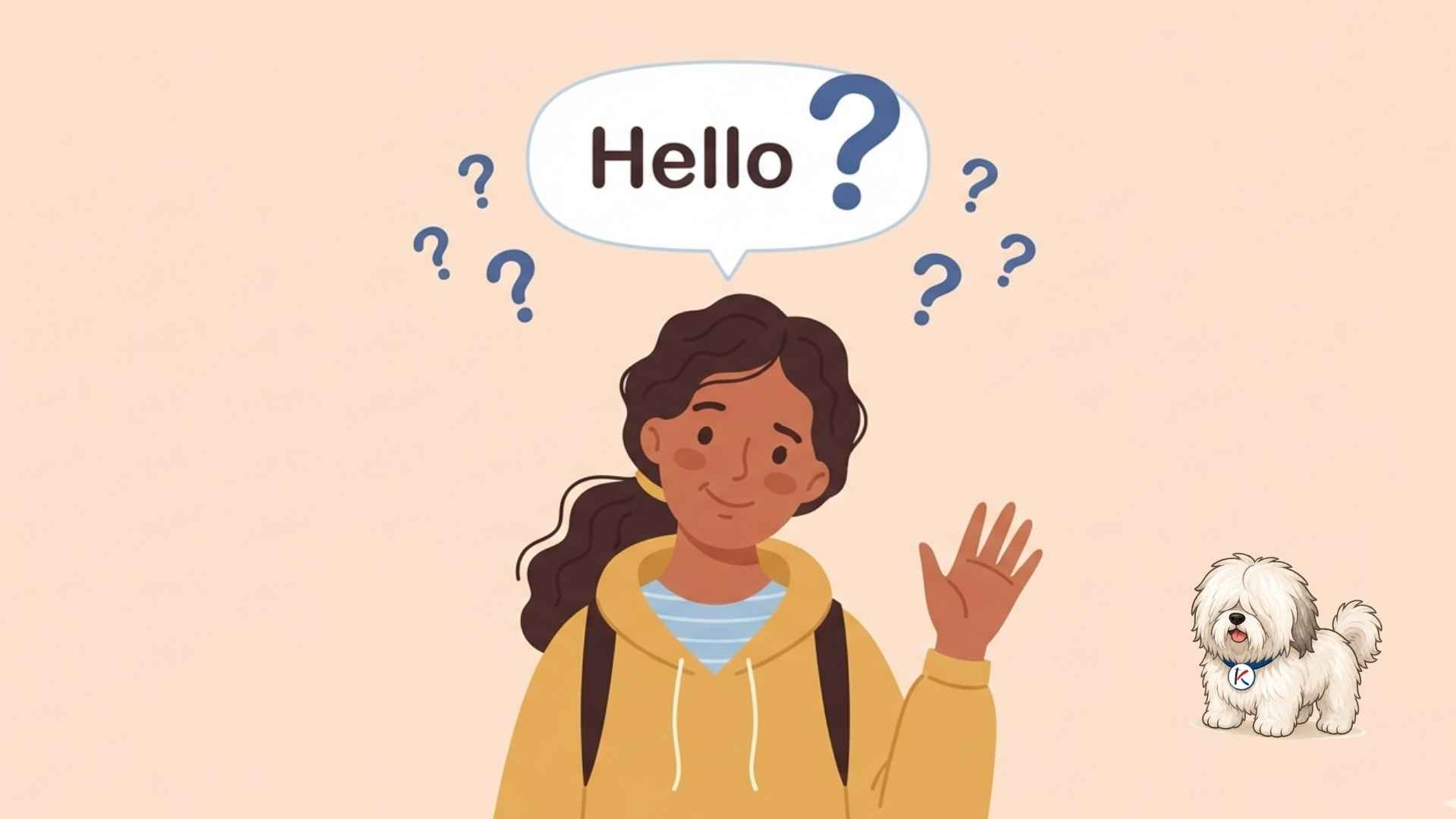
Why Does Korean “Hello” Have a Question Mark? (1 Secret)

Korean Hello
📌 한국어가 쉬워요? 여기를 보세요.👉 [한국어 blog]

Hello? Bonjour? Hola? 你好? السلام عليكم? नमस्ते? Здравствуйте?

Does the greeting in your language have a question in it? How do you say Hello in Korean?

You say “안녕하세요?” (an-nyeong-ha-se-yo?), right?

But look closely — there is a question mark (?) at the end. Open any Korean textbook, and it is always there.

Korean Hello

So why does the “Korean Hello” sound like a question? Let me tell you a little story.

What does Korean Hello “안녕?” really mean?

When learning Korean Hello “안녕(an-nyeong)?“, Most students never even notice this little question mark — but once you do, the first question is simple: what does “안녕” actually mean?

안녕 (安寧)” comes from Chinese characters. A long time ago, before King Sejong created Hangul, Korean people spoke Korean but wrote with Chinese characters. Even today, many Korean words still come from them. (We’ll talk more about this in another story.)

They mean a state of being calm and safe, with nothing wrong.” In English, it is close to “peace or well-being“.

So if we translate “안녕하세요?” word by word, it sounds like this:

“Are you at peace? Are you doing well, with nothing wrong?”

Is it the same as “How are you?” then? Almost.

In Korean, “How are you?” is usually “잘 지내세요?” (jal- ji-nae-se-yo?).

When you add a “question mark(?)” to the greeting “안녕하세요”, it becomes a soft way of asking about someone. If you really want to ask how they are, you write “안녕하세요?“. If it is just a light hello, you write “안녕하세요.

And honestly, when you speak, the sound matters more than the mark. Raise your voice a little at the end, and it feels like a question. Keep it flat, and it feels like a greeting.

Wait — Why do Korean keep asking about my life?

When you come to Korea, you will hear these too:

“밥 먹었어요?” (bap meo-geos-seo-yo?)Did you eat?

“어디 가세요?” (eo-di ga-se-yo?)Where are you going?

At first, this can feel strange.

Why do they want to know if I ate, or where I am going?”

But Korean people are not really trying to look into your private life. These are like cousins of “안녕하세요?”.

It is closer to a warm “You doing okay? Nothing wrong?”

Why do Koreans ask if you are okay?

Here comes the old story.

Long ago in Korea, neighbors lived close together and helped each other. They farmed together, and they got through hard times together.

Because of where Korea sits on the map, it was invaded by other countries many times through history. So there were many poor and hungry years. In times of war, or when people were dying of hunger, the first thing you wondered each morning was simple: Is my neighbor safe? Did anything bad happen in the night?

So when people met, they greeted each other like this:

“Are you at peace? Are you doing well?”
“You are not going hungry, are you?”

In years when many people were hungry, “밥 먹었어요? (Did you eat?)” really meant “Are you okay? Did you get enough to eat?” That caring feeling still lives inside today’s “안녕하세요?”.

Of course, this is not a proven history. But when you think of it this way, doesn’t a simple daily greeting start to feel a little warmer?

So remember just one thing: in Korean, a question-shaped greeting is not really asking for information. It is a way to start a conversation and to check in with each other.

How do I know what these greetings really mean?

It depends on the situation. Take “밥 먹었어? (Did you eat?)”:

  • From an adult or a friend you have not seen in a while → it means How have you been?”
  • Right before a meal time → it might mean “Want to eat together?”
  • After a meal time → it might really be asking if you ate

You can answer simply.

“네, 먹었어요. (Yes, I ate.)” or “아직요. ○○ 씨는요? (Not yet. How about you?)” is enough.

어디 가세요? (Where are you going?)” works the same way.

If you do not want to explain, you can just say “잠깐 볼일 보러 가요. (I’m just going out for a bit.)”

And “안녕하세요?” can feel like “How are you?”, but most of the time you do not need a long answer.

Just saying “안녕하세요?” back is perfect.

Who do I say it to?

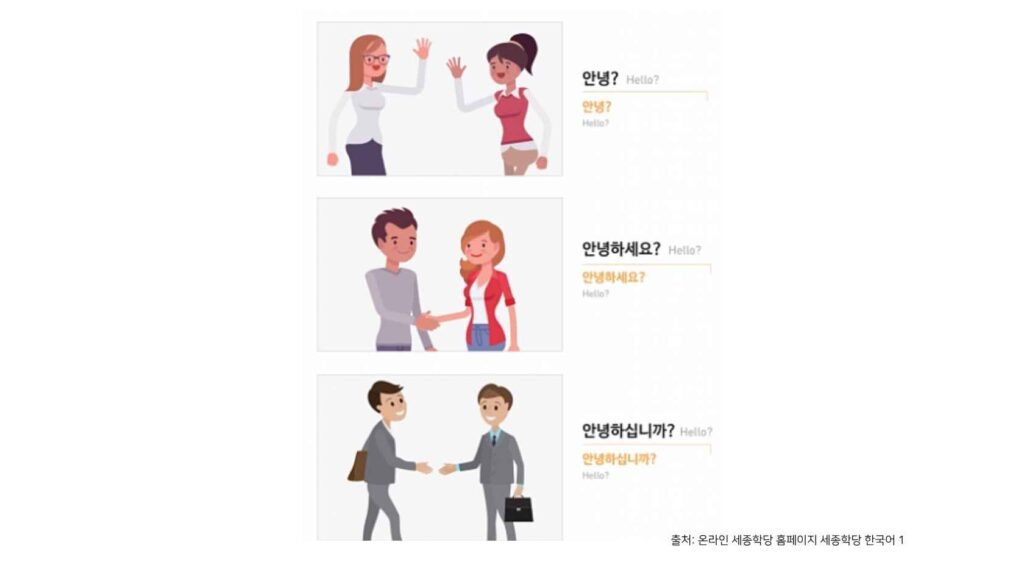
When using Korean Hello in daily life, greetings have different levels of politeness.

They change a little depending on who you are talking to.

  • 안녕? (an-nyeong?) → a close friend, a child, or someone you already speak casually with
  • 안녕하세요? (an-nyeong-ha-se-yo?) → someone you just met, and most everyday situations (the safest choice)
  • 안녕하십니까? (an-nyeong-ha-sim-ni-kka?) → very formal places, like a presentation, an interview, or an official event

Remember one thing. With a child, “안녕?” feels natural.

But with an adult who looks a little younger than you, or with someone you just met, “안녕하세요?” is the safe choice — no matter their age.

The key is not age. It is your relationship.

One last thing

“안녕하세요?” is not just “Hello”. Inside it is an old, kind wish: I hope you are doing well.

So next time you greet someone with “안녕하세요?“, remember this little story. You are greeting them in a very old way, quietly saying:

“I hope you’re doing well today.”

Does “안녕하세요?” make a little more sense now?

So when you meet a Korean person on the street, let’s greet them properly — not just “안녕”, but “안녕하세요?

Does your language have a greeting that looks like a question? Tell me in the comments. I would love to know.🥰

See you again!

💡 Want to study more Korean expressions with detailed explanations? Check This 👉 [Korean culture!]


📝 Just remember this

SituationSay this
A close friend안녕? / 안녕! (annyeong)
Someone you just met, most situations안녕하세요? (annyeonghaseyo — safest)
Presentation, interview, formal event안녕하십니까? (annyeonghasimnikka)

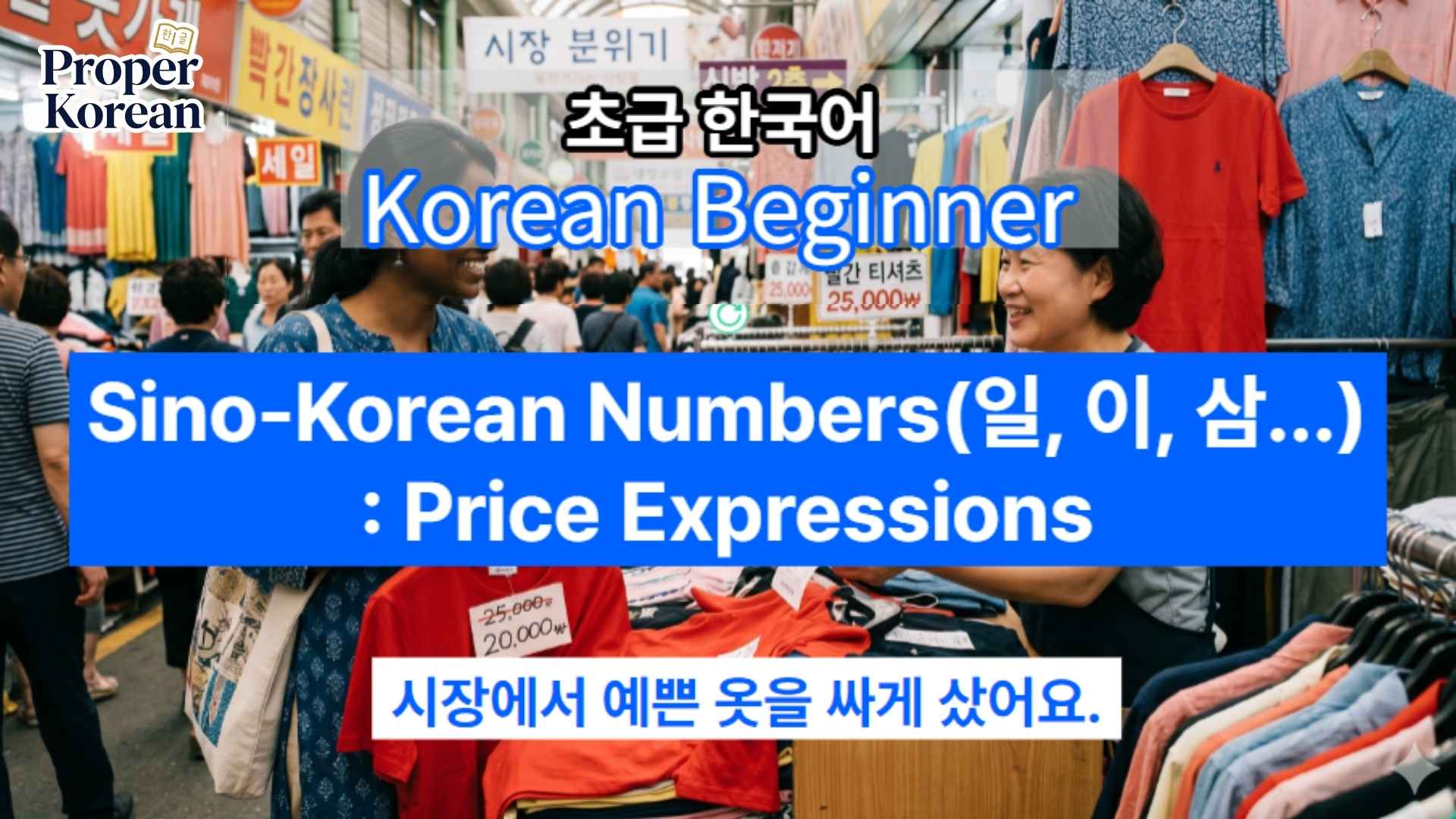
Sino-Korean Numbers 101: Mastering Price Expressions

Sino-Korean Numbers

‘Sino-Korean Numbers (일, 이, 삼, 사…)‘ are essential for daily life in Korea and for visiting Korea’s charming traditional markets.

Korean has two ways to count numbers, so many learners find it a bit confusing at first. But don’t worry! Today’s lesson is on Sino-Korean numbers, which are very useful when talking about prices, dates, phone numbers, and floor levels.

Once you master this, you will be able to confidently ask and answer prices when you find an outfit or shoes you love in a traditional market! Let’s get started, shall we?

1. Meaning & Function of Sino-Korean Numbers

The Korean number system is largely divided into ‘Sino-Korean Numbers’ and ‘Native Korean Numbers’. The Sino-Korean numbers (일, 이, 삼, 사…) we are learning today are mainly used in the following situations:

TypeReadingUsage
한자어 수
Sino-Korean Numbers
일·이·삼·사·오…Prices (Won), Dates (Month/Day), Floors, Phone numbers, Minutes (Time)
고유어 수
Native Korean Numbers
하나·둘·셋·넷·다섯…Quantity (Items/Clothes/Pairs), Age, Hour (Time)

🌟 Key Point for Shopping! 물건의 가격을 말할 때는 꼭 한자어 수(일, 이, 삼, 사)로 말하세요~! When you ask for the price of an item in a market, you must use ‘Sino-Korean Numbers’.

  • ✅ 이만 오천 원이에요. (It is 25,000 won.)
  • ❌ 두만 다섯천 원이에요. (This is incorrect.)

2. Number Table & Price Expressions of Sino-Korean Numbers

① Basic Sino-Korean Numbers (0 ~ 10)

NumberSino-KoreanNumberSino-Korean
0영 / 공6
17
28
39
410
5

② Large Numbers and Units

UnitSino-Korean Example
1015 → 십오 (Sip-o)
100300 → 삼백 (Sam-baek)
1,0005,000 → 오천 (O-cheon)
10,00020,000 → 이만 (I-man)

③ Price Reading Practice

Unlike English, Korean prices are counted in units of 10,000 (Man) rather than 1,000 (Thousand). This is very important! Read the numbers in order from left to right and add ‘원 (Won)’ at the end.

PriceHow to Read
500원오백 원 (O-baek won)
1,000원천 원 (Cheon won) (Note: Do not say ‘Il-cheon won’)
3,500원삼천오백 원 (Sam-cheon-o-baek won)
10,000원만 원 (Man won) (Note: Do not say ‘Il-man won’)
15,000원만 오천 원 (Man o-cheon won)
23,000원이만 삼천 원 (I-man sam-cheon won)
100,000원십만 원 (Sip-man won)

④ Expanded Real-Life Examples

Here are 10 diverse, real-life example sentences showing how to use Sino-Korean numbers for prices, dates, floors, and phone numbers in everyday situations.

ContextKorean SentenceEnglish Translation
Shopping (Asking Price)이 모자는 팔천 원이에요.This hat is 8,000 won.
Shopping (Bargaining)이만 오천 원으로 깎아 주세요.Please give me a discount of 25,000 won.
Shopping (Total Amount)오늘 시장에서 사만 원을 썼어요.I spent 40,000 won at the market today.
Location (Floor)화장실은 층에 있어요.The restroom is on the 3rd floor.
Appointment (Date)제 생일은 십오 일이에요.My birthday is May 15th (5th month, 15th day).
Contact (Phone Number)제 전화번호는 공일공-일이삼사-오육칠팔이에요.My phone number is 010-1234-5678.
Time (Minutes)지금은 세 시 오십 분이에요.It is 3:50 now.
Transportation (Bus Number)학교에 갈 때는 백사 번 버스를 타요.I take bus number 104 when going to school.
Shopping (Change)거스름돈은 이천 원이에요.The change is 2,000 won.

For more official information about Korean culture, visit the King Sejong Institute.

3. Common Mistakes of Sino-Korean Numbers

What are the most common mistakes learners make when reading numbers? Check the table below to see the correct expressions!

❌ Incorrect✅ CorrectReason
23,000원
➡️ 이십 삼천 원 (❌)
23,000원
➡️ 이만 삼천
Koreans use the 10,000 (Man) unit, not the 1,000 (Cheon) unit.
10,000 ➡️ 일만 원 (❌)
1,000 ➡️ 일천 원 (❌)
10,000 ➡️
1,000 ➡️
The number ‘1 (Il)’ at the beginning of a large number is usually omitted.
8,000원 ➡️ 여덟천 원(❌)8,000원 ➡️ 팔천Do not mix Native Korean numbers with Sino-Korean numbers for prices.

4. Real-Life Dialogue

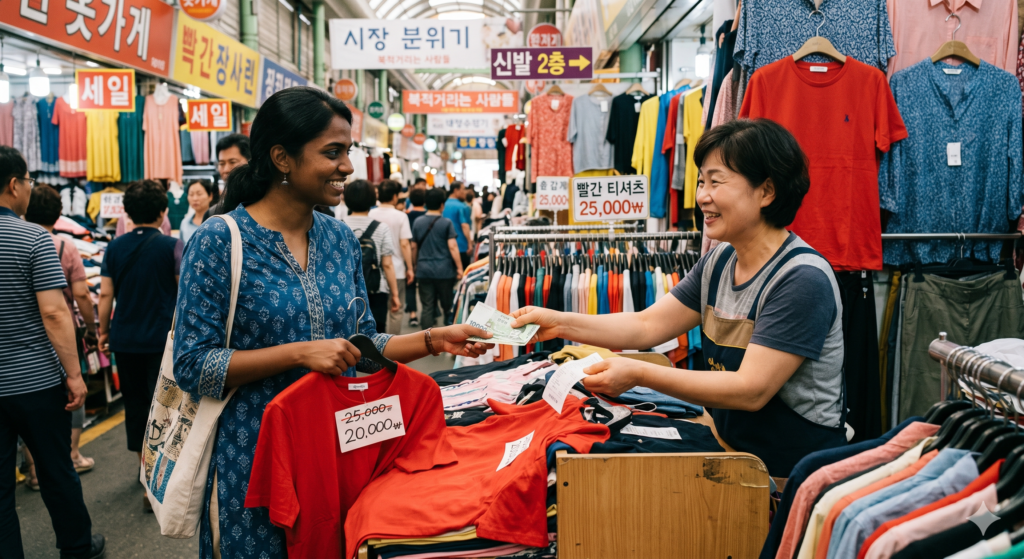
Aditi, an international student from India, is talking to a store owner at a traditional market. Let’s see how Sino-Korean numbers are used in the conversation!

Sino-Korean Numbers lesson for beginners

① Listening Practice (듣기 연습)

Instructions: Listen first and answer the following questions.

1) 아디티 씨는 무엇을 샀습니까?

2) 아디티 씨는 영수증을 받았습니까?

  • 아디티: 저 빨간 옷 얼마예요?
  • 직 원: 이만 오천 원이에요.
  • 아디티: 조금 비싸요. 깎아 주세요!
  • 직 원: 그럼 이만 원에 드릴게요.
  • 아디티: 감사해요! 여기 이만 원이요.
  • 직 원: 네, 영수증 드릴까요?
  • 아디티: 네, 주세요. 그런데 신발 가게는 몇 층이에요?
  • 직 원: 이 층이에요.

② Comprehension Questions (내용 이해 질문)

1) 아디티 씨는 어떤 옷을 사고 싶어 해요?

2) 아디티 씨는 그것을 얼마에 샀어요?

3) 아디티 씨는 또 무엇을 사고 싶어 해요?

5. AI Tutor Practice

🤖 Digital Literacy Tip! You can practice price expressions with an AI Tutor (ChatGPT). Instead of just memorizing, try simulating a shopping scenario with AI. It will help you remember the numbers much faster!

[Copy and paste this prompt into AI: like ChatGPT ]

“I am a beginner Korean student studying Sino-Korean numbers. Please act as a shop owner in a Korean traditional market. I will ask you for the price of different items, and you answer using Sino-Korean numbers (e.g., 15,000 won, 23,000 won). Please keep the conversation simple and correct my mistakes in Korean.”

6. Today’s Quiz

Test your knowledge of the prices and numbers we learned today!

[Quiz 1] Read the following prices in Sino-Korean numbers.

  1. 3,000원 => ( ___________________ )
  2. 12,000원 => ( ___________________ )
  3. 25,000원 => ( ___________________ )

[Quiz 2] Complete the dialogue.

  • 가: 이 편한 신발은 얼마예요? (How much are these comfortable shoes?)
  • 나: ___________________________이에요. (119,000원)

7. Wrap-up

Today, we studied Sino-Korean numbers, which are essential for asking and answering prices at a market. Now, you won’t be confused when you see price tags or hear the vendor telling you the price, right? Don’t forget to review on your own!

Next Lesson Preview: In the next lesson, we will learn about ‘Counter Nouns’ (개, 벌, 켤레, etc.) used to count items such as apples, clothes, and shoes.

Next Lesson Preview: In the next lesson, we will learn about ‘Counter Nouns’. You can also review our previous lessons on the Proper Korean Home.

See you next time! 또 만나요~:)

error: Content is protected !!