Mastering essential TOPIK II Art Vocabulary will boost your exam score!
Do you enjoy movies, music, books, exhibitions, or musicals?
In DAY 5 of our 25-Day TOPIK II Vocabulary Challenge, you will learn 20 important Korean words about art, literature, performances, and creative works. These words can appear in TOPIK II reading and listening questions about exhibitions, performances, books, artists, and reviews.
First, try the vocabulary game above. Then come back and review the words you missed in 내 단어장.
Click 오늘의 학습 시작 🚀
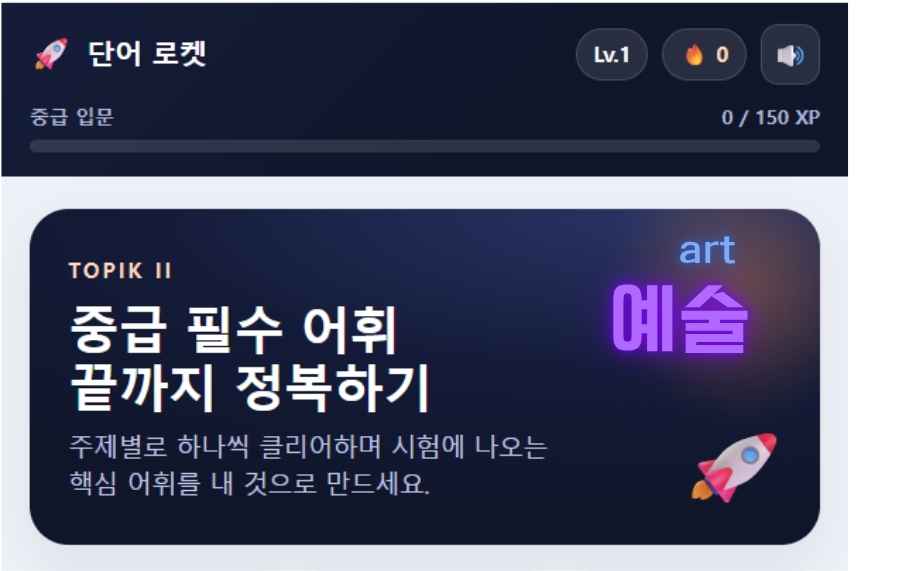
중급 필수 어휘
끝까지 정복하기
주제별로 하나씩 클리어하며 시험에 나오는 핵심 어휘를 내 것으로 만드세요.
🚀🎉 쇼핑 클리어!
🔎 한국어로 공부하고 싶어요? 👉 [ TOPIK II 필수 어휘 ② 인간관계·감정 ]
Master Essential TOPIK II Art Vocabulary
This time, pay attention to one important question: Is the word about creating art, seeing art, or describing your feeling about art?
That will make the words much easier to remember.
| 단어 | English | 쉬운 한국어 풀이 | 예문 |
|---|---|---|---|
| 감동하다 | be moved; be touched | 아름다운 그림이나 글, 친절한 행동 등을 보고 마음이 깊게 움직이다 | 가사가 담고 있는 의미에 감동했다. (I was moved by the meaning of the song lyrics.) |
| 개최되다 | be held | 회의, 모임, 전시회, 대회 등의 행사가 열리다 | 동양화 전시가 한 달 동안 개최된다. (An exhibition of traditional Asian paintings will be held for one month.) |
| 고전 | classic | 옛날에 만들어졌지만 지금까지 가치가 있고 널리 사랑받는 문학이나 예술 작품 | 고전은 현대의 삶에도 많은 영향을 미친다. (Classics still have a strong influence on modern life.) |
| 관람 | viewing; watching | 영화, 연극, 전시, 운동 경기 등을 직접 가서 보는 것 | 어떤 공연을 관람하면 좋을지 고민하고 있다. (I am thinking about which performance to watch.) |
| 글쓴이 | writer; author | 글이나 책을 직접 쓴 사람 | 글쓴이는 행복의 기준이 사람마다 다름을 강조하였다. (The writer stressed that each person has a different idea of happiness.) |
| 등장인물 | character | 영화, 소설, 연극, 드라마 등에 나오는 사람 | 등장인물은 무대 한복판에서 독백을 이어 갔다. (The character continued speaking alone in the middle of the stage.) |
| 문학 | literature | 시, 소설, 수필처럼 사람의 생각과 감정을 글로 표현하는 예술 | 문학 작품에는 시, 소설, 수필 등의 장르가 있다. (Literary works include poetry, novels, and essays.) |
| 뮤지컬 | musical | 배우들이 노래, 춤, 연기를 함께 보여 주는 무대 공연 | 뮤지컬은 노래와 춤, 연기가 함께 있는 공연 예술이다. (A musical is a performance that includes songs, dance, and acting.) |
| 비극적이다 | tragic | 매우 슬프고 불행한 일이 일어나 마음이 아픈 느낌이 들다 | 셰익스피어는 비극적인 이야기를 쓰기도 했다. (Shakespeare also wrote tragic stories.) |
| 생동감 | liveliness; sense of life | 진짜 살아 움직이는 것처럼 활기차게 느껴지는 느낌 | 그림에 생동감이 있어서 실제 모습처럼 느껴진다. (The painting feels very real because it is full of life.) |
| 섬세하다 | delicate; detailed | 아주 작고 세밀한 부분까지 꼼꼼하고 자세하다 | 화가는 옷의 무늬까지 섬세하게 표현했다. (The artist showed even the patterns on the clothes in great detail.) |
| 손꼽다 | consider one of the best | 여러 사람이나 것 중에서 특별히 뛰어나다고 생각하다 | 많은 사람들이 이 영화를 올해 최고의 작품으로 손꼽는다. (Many people consider this one of the best movies of the year.) |
| 손꼽히다 | be considered one of the best | 여러 사람이나 것 중에서 아주 뛰어나다고 인정받다 | 이 연극은 올해 최고의 작품 중 하나로 손꼽힌다. (This play is considered one of the best works of the year.) |
| 음악 | music | 목소리나 악기 소리를 이용하여 표현하는 예술 | 전통 음악을 배우려는 젊은 사람들이 늘고 있다. (More young people are learning traditional music.) |
| 응용하다 | apply; adapt | 이미 배운 지식이나 기술을 다른 상황에 맞게 바꾸어 사용하다 | 전통 그림의 표현 방법을 현대 디자인에 응용했다. (The artist applied traditional painting methods to modern design.) |
| 인상적이다 | impressive; memorable | 어떤 모습이나 일이 마음에 강하게 남아 오래 기억되다 | 배우가 조용히 우는 장면이 가장 인상적이었다. (The scene where the actor cried quietly was the most memorable.) |
| 전시 | exhibition; display | 사람들이 볼 수 있도록 그림이나 작품 등을 보여 주는 것 | 전시는 8월 1일부터 한 달 동안 이어집니다. (The exhibition will continue for one month from August 1.) |
| 조각 | sculpture | 나무, 돌, 금속 등을 깎거나 다듬어서 만든 미술 작품 | 조각 속에 여러 동물과 식물이 표현되어 있었다. (Many animals and plants were shown in the sculpture.) |
| 조화롭다 | harmonious | 여러 가지가 서로 잘 어울려 자연스럽고 보기 좋다 | 배우들의 연기가 조화로워서 영화에 몰입할 수 있었다. (The actors worked well together, so I could focus on the movie.) |
| 창작하다 | create | 새로운 생각이나 방법으로 작품을 새롭게 만들어 내다 | 새로운 작품을 창작하는 과정은 힘들지만 즐겁다. (Creating a new work is difficult, but the process is enjoyable.) |
Learn the Words by Situation
You do not need to memorize all 20 words separately. Try putting them into three groups.
1. Creating Art
창작하다 · 응용하다 · 문학 · 음악 · 조각
An artist can 창작하다 a new work.
They can also 응용하다 an old idea or technique in a new way.
2. Seeing and Enjoying Art
전시 · 관람 · 개최되다 · 뮤지컬
An exhibition is 개최되다.
You go there and 관람하다 the exhibition.
3. Talking About Your Reaction
감동하다 · 인상적이다 · 생동감 · 섬세하다 · 조화롭다
These words are useful when you describe what you saw, read, or heard.
Learning vocabulary by situation can help you understand TOPIK passages faster.
⚠️ Do Not Confuse These Words
감동하다 vs. 인상적이다
These two words may look similar, but the feeling is different.
감동하다
→ Your heart or emotions are strongly moved.
- 영화를 보고 감동했다.
(I was moved by the movie.)인상적이다
→ Something stays strongly in your memory.
- 마지막 장면이 인상적이었다.
(The last scene was memorable.)Something can be 인상적이다 without making you emotional.
전시 vs. 관람
전시 is something that people can go and see.
- 미술관에서 사진 전시가 열린다.
(A photo exhibition is being held at the art museum.)관람 is the action of going and seeing it.
- 주말에 사진전을 관람했다.
(I visited and viewed the photo exhibition on the weekend.)Think:
전시가 개최되다 → 전시를 관람하다
손꼽다 vs. 손꼽히다
This pair is especially important.
손꼽다
→ Someone considers a person or thing one of the best.
- 사람들은 이 작품을 최고의 영화로 손꼽는다.
손꼽히다
→ A person or thing is considered one of the best.
- 이 작품은 최고의 영화로 손꼽힌다.
The meaning is similar, but the sentence structure is different.
TOPIK Study Tip 💡
For TOPIK II, do not memorize only:
- 개최되다 = be held
- 관람 = viewing
- 감동하다 = be moved
Learn the words that often appear together:
- 전시가 개최되다
- 공연을 관람하다
- 작품을 창작하다
- 기술을 응용하다
- 감동적인 이야기
- 인상적인 장면
- 생동감이 있다
- 섬세하게 표현하다
- 최고의 작품으로 손꼽히다
TOPIK questions often give you the situation first and ask you to choose the correct word. If you remember these small word groups, finding the answer becomes much easier.
Can You Remember All 20 Art Words? 🚀
Before you leave, try this:
- What word means “your heart was deeply moved”?
- What word means “something stayed strongly in your memory”?
- And what is the difference between 손꼽다 and 손꼽히다?
If you can answer these questions, you already understand some of the trickiest words from DAY 5. Now go back to the vocabulary game and try again for long-term memory.
Do not worry about getting every answer right the first time. Learn from the words you miss, play again, and build your TOPIK II vocabulary one topic at a time.
See you in DAY 6! 🚀
🔎 Learn more about TOPIK Ⅱ writing 👉 [ TOPIK writing ]
<Latest Posts>