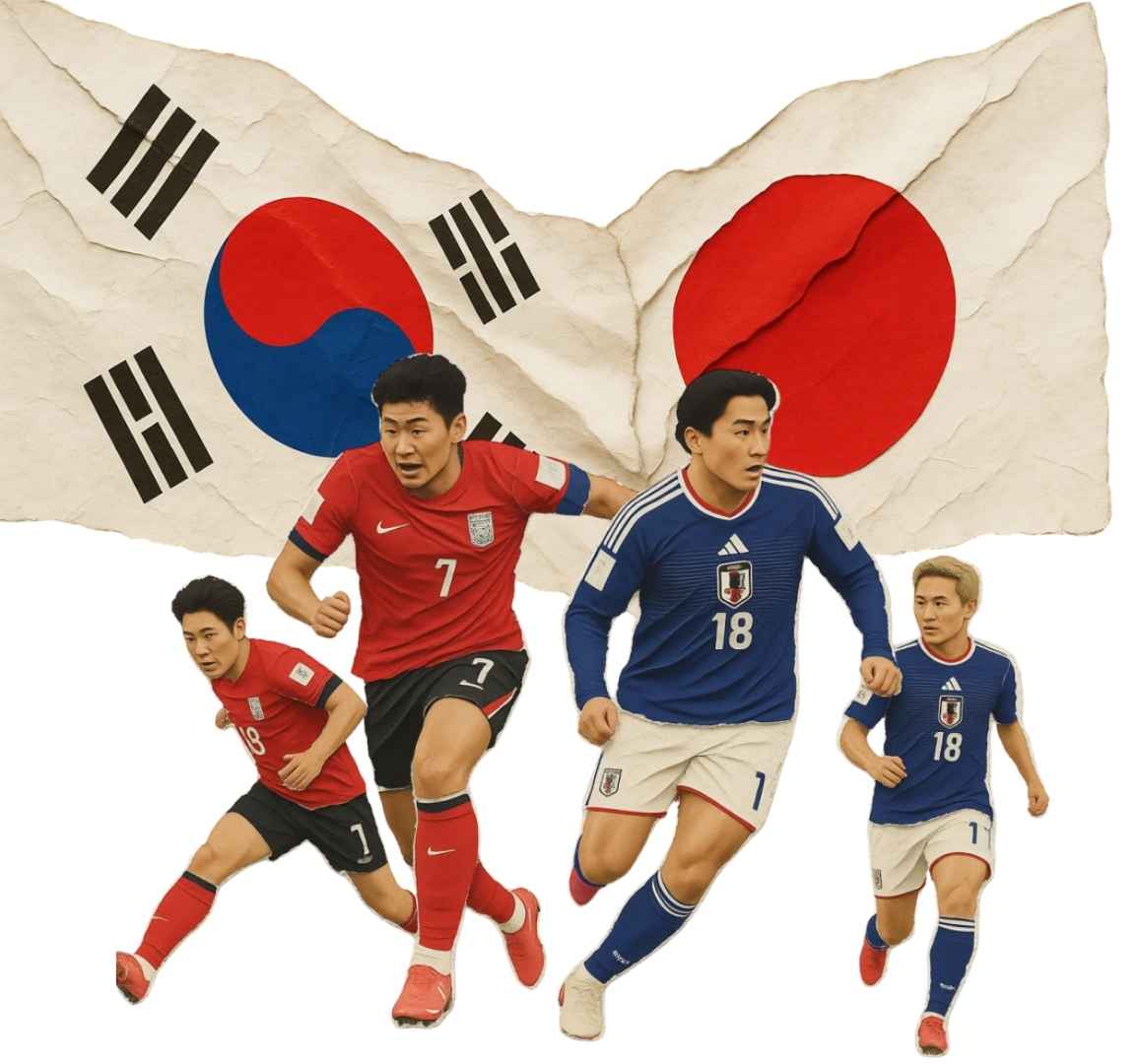
Korean Liberation Day(Gwangbokjeol): Do Koreans Still Dislike Japan? – Part 2

Korean Liberation Day
📌 한국어로 읽고 싶어요? 👉 [한국어 블로그]

Welcome back! In Part 1 of our Korean Liberation Day (Gwangbokjeol) series, we talked about how Korea got its light back — the country and the language that were taken, the people who protected them, and the liberation of 1945.

But that light still has some shadow left. This is why the story of 광복절(Gwang-bok-jeol) does not end in 1945.

A story that is not finished yet

The Japanese occupation looks like a past that is completely over. But some of the wounds from that time still continue today.

The clearest examples are the Japanese Military Sexual Slavery “comfort women” victims and the forced mobilization victims. Some of the grandmothers who suffered are still alive today. They live in the same time as us.

In front of the Japanese Embassy in Seoul, there is a Statue of a Girl (소녀상) — a statue made to remember the “comfort women” victims. The long-running gatherings there quietly say that this problem is not over yet.
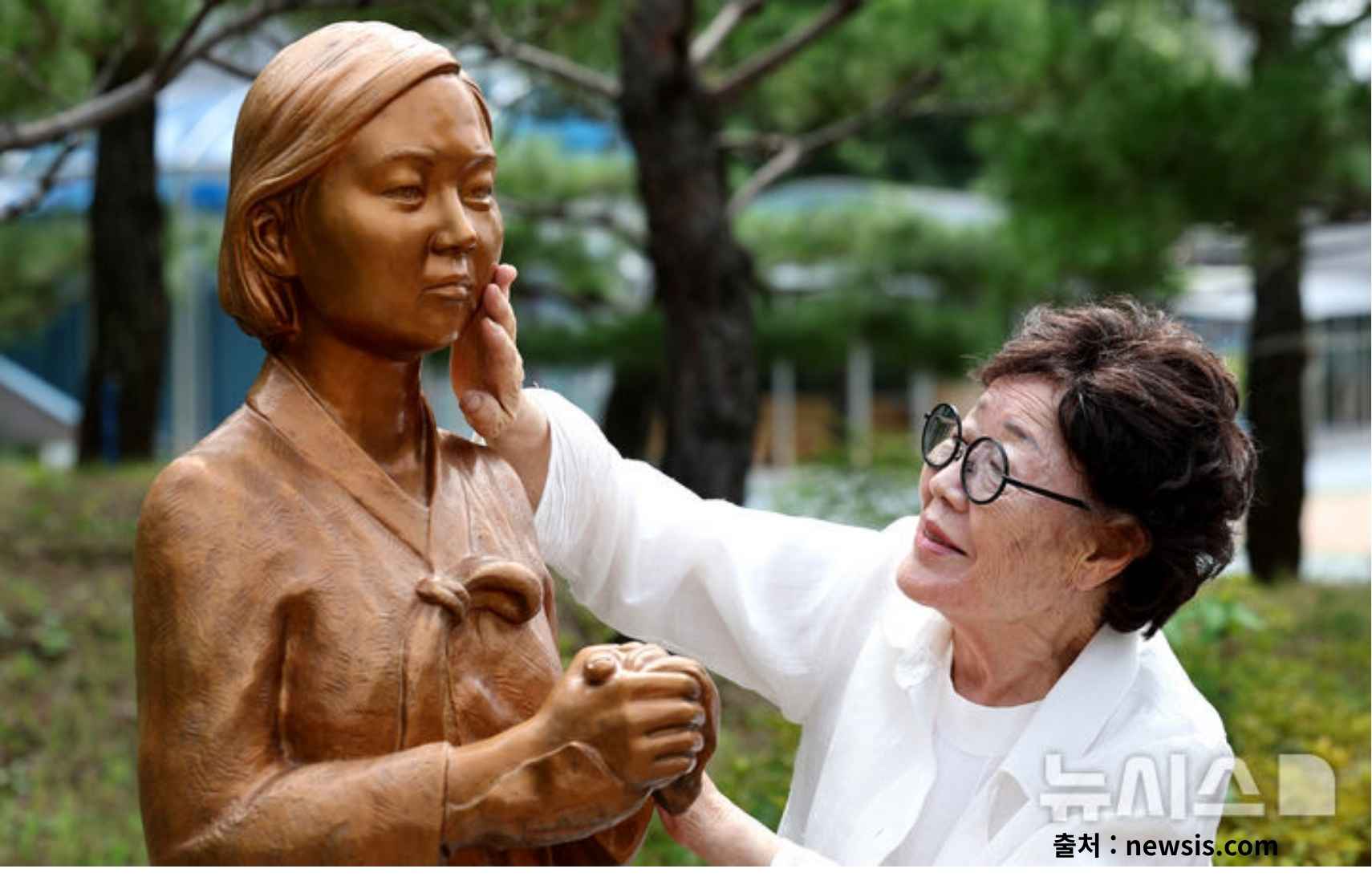
Korean Liberation Day Statue of a Girl

Legal fights also continue. One side wants to remember, the other side wants to erase. Even now, the two countries’ views have not come closer.

There is another situation to watch carefully — the Sado Mine (사도광산). This is a mine where about 1,500 Korean people were taken by force and made to work hard during the occupation. In 2024, Japan listed it as a UNESCO World Heritage site and promised to properly explain the “whole history,” including the forced labor. But in the actual exhibition, the word “forced” was missing, and both Koreans and Japanese were described as just “all workers.” So in 2026, UNESCO again asked Japan to tell the history properly.

Because things like this happen, in Korea, remembering itself is seen as an effort and a responsibility. If there is a force trying to erase, there must also be a force trying to keep.

Korea keeps this history in films

This is why so many films about painful history are made in Korea — to not forget, and to keep a record. If you are interested, you could start with these:

  • 아이 캔 스피크 I Can Speak” (2017) — The story of a survivor of Japanese Military Sexual Slavery (known as the “Comfort Women”) who learns English to testify before the U.S. Congress. Its light, approachable tone makes it a good starting point for anyone new to this history.
  • 귀향 Spirits’ Homecoming” (2016) — A film that faces the “Japanese Military comfort women” history directly. It was hard to get funding, so it was completed with support from many ordinary citizens.
  • 군함도 The Battleship Island” (2017) — The story of Koreans forced to work in the Hashima Island coal mine. Good to watch together with the Sado Mine story above.
  • 허스토리 Herstory” (2018) — Based on the true “Kanpu Trial,” where survivors in the 1990s stood up in a Japanese court themselves.

So, do Koreans still dislike Japan?

When you live in Korea, foreigners often ask this question. But the answer is not that simple.

Today, Korea and Japan are close neighbors. Many people travel between them and enjoy each other’s food, films, and music. Not many Koreans see each Japanese person living today as the same as the old Japanese empire.

But many Koreans also do not think the past is completely finished. So feelings toward Japan are often split into two hearts.

On one side is the feeling, “I want to get along well with Japanese people today.” On the other side is the feeling, “The wrongs of the past should be remembered clearly and resolved.” These two are not fighting each other — they are more like two feelings sitting side by side inside one person.

When history shows up in daily life — the Korea–Japan match

This subtle feeling sometimes jumps out at unexpected moments. A famous example is the Korea–Japan match (한일전), a sports game between Korea and Japan.

Whether it’s soccer or baseball, when the opponent is Japan, even people who usually don’t care about sports gather in front of the TV. In Korea, there is a half-joking saying: “We can lose to other countries, but we can’t lose to Japan.”

To a foreigner, this may look a little too much. But this heat is not really “hate” — it is closer to “pride that doesn’t want to lose.” After the game, most people go back to normal life, plan a trip to Japan, and eat Japanese ramen.

Speaking of travel — when Gwangbokjeol comes near, some people say, “Do I really have to travel to Japan on this exact day?” In reality, some Koreans do go to Japan even on this day. It just means that, on this one day, actions connected to Japan feel a little heavier than usual. If you are a foreigner, just knowing this feeling will help you understand Korean society much more deeply.

Remembering does not mean hating

When I talk about Gwangbokjeol, this is the part I most want to share.

The reason we remember history should not be to hate Japanese people today. But we should also be careful with the words, “For the future, let’s just forget the past.”

One country taking another by force. Taking people away to war and hard labor. Crushing the dignity of women. Trying to erase a people’s language. These things need to be remembered clearly. Remembering is not the same word as hating. It is closer to a promise: that such things must never happen again.

Today, I think about “Gwangbokjeol” once more

81 years ago, the people who met liberation came out to the streets and waved the Korean flag. It must have been the joy of getting their country back.

Some went to prison for shouting for independence. Some had their names taken away. Some were dragged to battlefields and factories. And some quietly studied Hangeul, made dictionaries, and passed the Korean language to the next generation.

Today, we speak and write Korean without a second thought, and people all over the world learn this language. If those people could see it, how would they feel? Maybe a little surprised — and maybe a little happy.

Gwangbokjeol is not a history only for Koreans. If you are learning Korean, then for just this one day, it would be nice to remember what kind of time this language passed through to reach you.

Gwangbokjeol. The day the light came back. And a day to quietly promise not to forget the time when that light was lost.

If your country has a similar day, please tell me in the comments~! I’d love to know, too.

See you in the next story. 안녕! 👋

📢 Want to learn more about Korean culture? 👉 [ Korean Culture ] 

📖 Key words in this story

WordMeaning
Wianbu (위안부)Japanese Military ‘Comfort Women’ — victims of Japanese Military Sexual Slavery during the colonial period; an issue that remains unresolved today.
Sonyeosang (소녀상)The “Statue of a Girl,” made to remember the “comfort women” victims.
Hanil Cheonggugwon Hyeopjeong (한일청구권협정)The 1965 agreement between Korea and Japan about compensation.
Sado Gwangsan (사도광산)A Japanese mine where Koreans were forced to work. Controversial after its UNESCO listing.
Haniljeon (한일전)A sports match between Korea and Japan.
Taegeukgi (태극기)The national flag of South Korea.

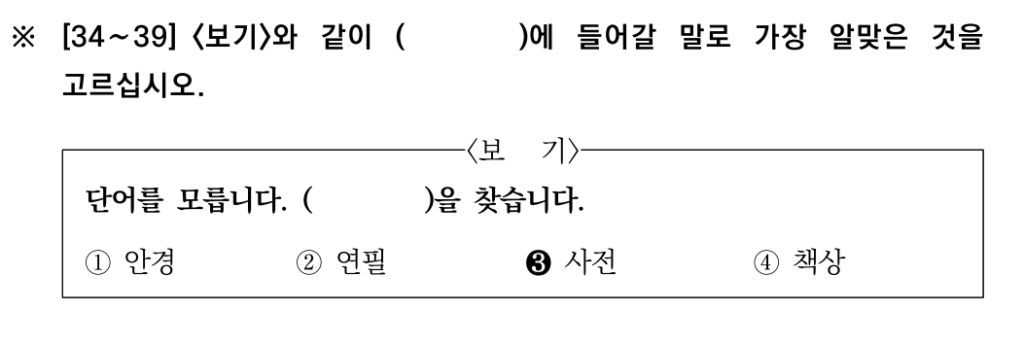
TOPIK I Reading 34–39 ④: 7 Adverbs to Fill the Blank (아주 · 자주 · 같이)

TOPIK I Reading

📌 한국말로 공부하고 싶어요? 👉 [한국어]

Do adverbs like 아주, 자주, and 가끔 look confusing in TOPIK I reading? 😊

The trick is simple: each adverb has one clear meaning. Learn 7 of them, and these questions become easy!

In questions 34–39, an adverb blank asks how much, how often, or how. Each TOPIK I reading question is worth 2 points.

Try each one first, then open the answer to check.

① Remember just one thing

Choose an adverb by its meaning, and read the other sentence for the clue.
e.g. 날씨가 (    ) 춥습니다 → How cold? → 아주 (very)
e.g. 좋아해서 (    ) 마십니다 → How often? → 자주 (often)

② Adverb card

MeaningAdverb
very much (degree)아주 (very)
many times (often)자주 (often)
sometimes, a little가끔 (sometimes)
together (with someone)같이 (together)
for the first time처음 (first time)
before something else먼저 (first / before)
quickly빨리 (quickly)
📌 Pair to remember: 자주 (often) ↔ 가끔 (sometimes).
📌 아주 often comes before an adjective. (아주 춥다 · 아주 맛있다)

Practice: TOPIK I reading adverb blanks

Try each TOPIK I reading question first.

Read the two sentences, choose the adverb, then open the box to check.

Question 1

오늘은 날씨가 (       ) 춥습니다. 그래서 옷을 많이 입습니다.

① 아주② 자주③ 가끔④ 먼저


🔽 See the answer (Question 1)

Q: 오늘은 날씨가 ( ) 춥습니다.
(Today the weather is ( ) cold.)
👉 How cold? (degree)

A: ✅① 아주 (very) → It is very cold, so I wear many clothes!

② 자주 = often (many times).

③ 가끔 = sometimes.

④ 먼저 = first / before.


💡 Tip: before an adjective (춥다 · 덥다 · 맛있다), for “how much” → 아주 (very)!


Question 2

저는 커피를 좋아합니다. 그래서 (       ) 마십니다.

① 자주② 가끔③ 먼저④ 아까


🔽 See the answer (Question 2)

Q: 저는 커피를 좋아합니다. 그래서 ( ) 마십니다.
(I like coffee. So I drink it ( ).)
👉 I like it — how often?

A: ✅① 자주 (often) → If you like it, you drink it often!

② 가끔 = sometimes (a little).

③ 먼저 = first / before.

④ 아까 = a while ago.


💡 Tip: like it, so many times → 자주 (often)! (opposite: 가끔)


Question 3

저는 보통 걸어서 갑니다. (       ) 버스를 탑니다.

① 가끔② 아주③ 같이④ 빨리


🔽 See the answer (Question 3)

Q: 저는 보통 걸어서 갑니다. ( ) 버스를 탑니다.
(I usually walk. ( ) I take the bus.)
👉 Usually walk — the bus is how often?

A: ✅① 가끔 (sometimes) → I usually walk, but sometimes I take the bus!

② 아주 = very (much).

③ 같이 = together.

④ 빨리 = quickly.


💡 Tip: usually A, and ( ) B → “B sometimes” → 가끔!


Question 4

친구를 만났습니다. 우리는 (       ) 밥을 먹었습니다.

① 가장② 아직③ 같이④ 별로


🔽 See the answer (Question 4)

Q: 친구를 만났습니다. 우리는 ( ) 밥을 먹었습니다.
(I met my friend. We ate ( ).)
👉 “We” — did it together?

A: ✅③ 같이 (together) → We ate together with the friend!

① 가장 = most.

② 아직 = still / not yet.

④ 별로 = not really.


💡 Tip: “우리는 (we)” + ( ) → 같이 (together)!


Question 5

저는 그 사람을 모릅니다. 내일 (       ) 만납니다.

① 처음② 보통③ 제일④ 항상


🔽 See the answer (Question 5)

Q: 저는 그 사람을 모릅니다. 내일 ( ) 만납니다.
(I don’t know that person. Tomorrow I meet them ( ).)
👉 Don’t know them — which meeting is it?

A: ✅① 처음 (first time) → You don’t know them, so tomorrow is the first time!

② 보통 = usually.

③ 제일 = most.

④ 항상 = always.


💡 Tip: meet a person you don’t know → 처음 (first time)!


Question 6

이 케이크가 (       ) 맛있습니다. 그래서 매일 먹습니다.

① 아주② 가끔③ 먼저④ 아까


🔽 See the answer (Question 6)

Q: 이 케이크가 ( ) 맛있습니다.
(This cake is ( ) delicious.)
👉 How delicious? (degree)

A: ✅① 아주 (very) → It is very delicious, so I eat it every day!

② 가끔 = sometimes.

③ 먼저 = first / before.

④ 아까 = a while ago.


💡 Tip: before an adjective (맛있다), for “how much” → 아주 (very)!


Question 7

저는 아침에 (       ) 세수를 합니다. 그리고 밥을 먹습니다.

① 먼저② 가끔③ 아주④ 같이


🔽 See the answer (Question 7)

Q: 저는 아침에 ( ) 세수를 합니다. 그리고 밥을 먹습니다.
(In the morning I wash my face ( ). Then I eat.)
👉 Wash → eat: which order?

A: ✅① 먼저 (first) → I wash my face first, then I eat!

② 가끔 = sometimes.

③ 아주 = very.

④ 같이 = together.


💡 Tip: do A ( ), then B → “A first” → 먼저!


Question 8

시간이 없습니다. 그래서 (       ) 갑니다.

① 빨리② 같이③ 처음④ 가끔


🔽 See the answer (Question 8)

Q: 시간이 없습니다. 그래서 ( ) 갑니다.
(I have no time. So I go ( ).)
👉 No time — how do you go?

A: ✅① 빨리 (quickly) → If you have no time, you go quickly!

② 같이 = together.

③ 처음 = first time.

④ 가끔 = sometimes.


💡 Tip: no time → 빨리 (quickly)!

③ How to memorize the adverbs easily

Now you have practiced, here is the fastest way to grow your TOPIK I reading vocabulary.

  1. Group by meaning. degree (아주), how often (자주 · 가끔), together (같이).
  2. Learn the pair. 자주 (often) ↔ 가끔 (sometimes). They are opposites.
  3. Read the OTHER sentence and ask: how much? how often? how?
  4. Quiz yourself. See a meaning, and say the adverb. (many times → ?)

🤖Practice with AI: a Korean adverb speed game

You can practice TOPIK I reading alone with AI — and grow your Korean speaking too!

First, turn on the AI’s voice (read-aloud).

Then answer out loud in Korean. The game is played only in Korean.

🗣️”Let’s play a Korean adverb speed game. Please speak only in Korean during the game — no English. You say a short situation in Korean (for example: 좋아해서 여러 번 마셔요), and I say the adverb in Korean out loud (for example: 자주). Give me 10 quickly, then tell me my score in Korean. Use only beginner words.”

⚠️ AI can make mistakes.

Always check with real past exams at the end. AI is for practice; the past exams are the answer key.

Summary

  • Choose an adverb by its meaning, and read the other sentence for the clue.
  • 아주 (degree) · 자주 / 가끔 (how often) · 같이 (together) · 처음 / 먼저 (order) · 빨리 (quickly).
  • Learn 자주 ↔ 가끔 as a pair to erase wrong choices fast.

Good Job! Keep practicing, and you can all pass TOPIK Level 2. 🎉

Have a question? Please leave a comment.

See you in the next lesson!

📢 want to practice TOPIKⅠ Listening next? 👉 [ TOPIKⅠ Listening ] 

FAQ

Q: What are TOPIK I reading questions 34–39?

A: They ask you to fill a blank with the right word — a particle, noun, verb, adjective, or adverb. Each question is worth 2 points.

Q: How do I choose the right adverb for the blank?

A: Choose by meaning and read the other sentence. Ask: how much (아주), how often (자주 · 가끔), or how (같이 · 빨리)?

Q: Where does 아주 usually go?

A: 아주 (very) usually comes before an adjective, like 아주 춥다 (very cold) or 아주 맛있다 (very delicious).

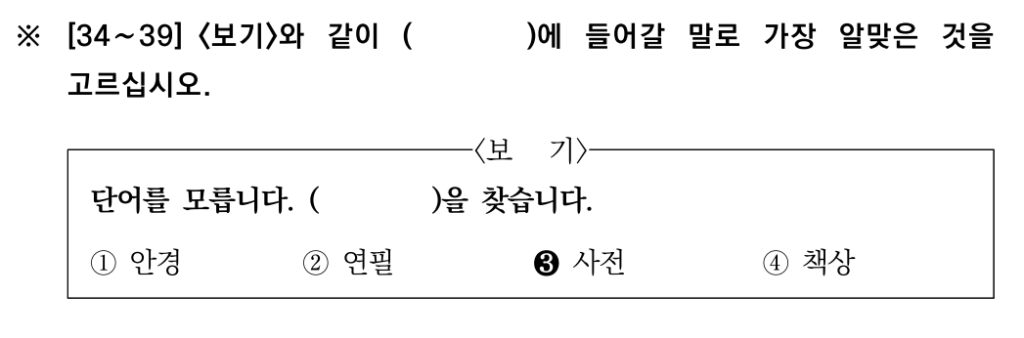
TOPIK I Reading 34–39 ③: 8 Adjective Blanks & 5 Opposite Pairs

TOPIK I Reading

📌 한국말로 공부하고 싶어요? 👉 [한국어]

Do you keep mixing up 쉽다 (easy) and 어렵다 (hard) in TOPIK I reading? 😊

Don’t worry — the other sentence always tells you which one. Just read it first!

In questions 34–39, an adjective blank asks about a state — how something is (아프다, 바쁘다, 가깝다…). Each TOPIK I reading question is worth 2 points.

Try each one first, then open the answer to check.

① Remember just one thing

An adjective describes a state (how something is).
Read the other sentence — the reason or result — and choose the state that fits.
e.g. 약을 먹어요 (take medicine) → 아프다 (sick/hurt).
And learn opposite pairs (쉽다 ↔ 어렵다) to erase wrong choices fast.

② Adjective card

When you see this situation…Use this adjective
약을 먹어요 / 병원에 가요아프다 (sick / hurt)
시간이 없어요 / 일이 많아요바쁘다 (busy)
늦게까지 일했어요피곤하다 (tired)
집 앞에 있어요 / 걸어가요가깝다 (close / near)
시험을 잘 봤어요쉽다 (easy)
점수가 나빴어요어렵다 (difficult)
발이 아파요 (신발)작다 (small)
📌 Learn opposite pairs together — then you can erase the wrong choice fast.
많다 ↔ 적다 (many ↔ few) · 크다 ↔ 작다 (big ↔ small) · 가깝다 ↔ 멀다 (near ↔ far) · 쉽다 ↔ 어렵다 (easy ↔ hard) · 싸다 ↔ 비싸다 (cheap ↔ expensive)

Practice: TOPIK I reading adjective blanks

Try each TOPIK I reading question first.

Read the two sentences, choose the adjective, then open the box to check.

Question 1

이가 (       ). 그래서 치과에 갑니다.

① 아픕니다② 예쁩니다③ 짧습니다④ 좋습니다


🔽 See the answer (Question 1)

Q: 이가 ( ). 그래서 치과에 갑니다.
(My tooth ( ). So I go to the dentist.)
👉 The other sentence: “치과에 갑니다 (go to the dentist)”.

A: ✅① 아픕니다 (hurt) → If your tooth hurts, you go to the dentist!

② 예쁘다 = pretty.

③ 짧다 = short.

④ 좋다 = good / nice.


💡 Tip: go to a dentist/hospital / take medicine → 아프다 (hurt)!


Question 2

요즘 일이 많습니다. 그래서 아주 (       ).

① 조용합니다② 바쁩니다③ 가볍습니다④ 깨끗합니다


🔽 See the answer (Question 2)

Q: 요즘 일이 많습니다. 그래서 아주 ( ).
(These days I have a lot of work. So I am very ( ).)
👉 The other sentence: “일이 많습니다 (a lot of work)”.

A: ✅② 바쁩니다 (busy) → A lot of work makes you busy!

① 조용하다 = quiet.

③ 가볍다 = light (not heavy).

④ 깨끗하다 = clean.


💡 Tip: a lot of work / no time → 바쁘다 (busy)!


Question 3

학교가 집 앞에 있습니다. 그래서 아주 (       ).

① 큽니다② 비쌉니다③ 가깝습니다④ 깨끗합니다


🔽 See the answer (Question 3)

Q: 학교가 집 앞에 있습니다. 그래서 아주 ( ).
(The school is in front of my house. So it is very ( ).)
👉 The other sentence: “집 앞에 있습니다 (in front of the house)”.

A: ✅③ 가깝습니다 (close) → If it is in front of your house, it is close!

① 크다 = big.

② 비싸다 = expensive.

④ 깨끗하다 = clean.


💡 Tip: in front of the house / walk there → 가깝다 (near)! (opposite: 멀다 far)


Question 4

오늘 늦게까지 일했습니다. 그래서 조금 (       ).

① 작습니다② 무겁습니다③ 피곤합니다④ 비쌉니다


🔽 See the answer (Question 4)

Q: 오늘 늦게까지 일했습니다. 그래서 조금 ( ).
(Today I worked until late. So I am a little ( ).)
👉 The other sentence: “늦게까지 일했습니다 (worked until late)”.

A: ✅③ 피곤합니다 (tired) → Working late makes you tired!

① 작다 = small.

② 무겁다 = heavy.

④ 비싸다 = expensive.


💡 Tip: worked a lot / didn’t sleep → 피곤하다 (tired)!


Question 5

도서관에 갔습니다. 책이 아주 (       ).

① 넓습니다② 많습니다③ 쉽습니다④ 짧습니다


🔽 See the answer (Question 5)

Q: 도서관에 갔습니다. 책이 아주 ( ).
(I went to the library. There are very ( ) books.)
👉 The other sentence: “도서관 (library)”, “책 (books)”.

A: ✅② 많습니다 (many) → A library has many books!

① 넓다 = wide (a place is big).

③ 쉽다 = easy.

④ 짧다 = short.


💡 Tip: a big number of ~ → 많다 (many)! (opposite: 적다 few)


Question 6

시험 공부를 많이 했습니다. 그래서 시험이 (       ).

① 나빴습니다② 작았습니다③ 쉬웠습니다④ 재미없었습니다


🔽 See the answer (Question 6)

Q: 시험 공부를 많이 했습니다. 그래서 시험이 ( ).
(I studied a lot for the test. So the test was ( ).)
👉 The other sentence: “공부를 많이 했습니다 (studied a lot)”.

A: ✅③ 쉬웠습니다 (easy) → If you study a lot, the test feels easy!

① 나쁘다 = bad.

② 작다 = small.

④ 재미없다 = not fun.


💡 Tip: did well / studied a lot → 쉽다 (easy)! (opposite: 어렵다 hard)


Question 7

이 신발이 (       ). 그래서 발이 아픕니다.

① 큽니다② 작습니다③ 많습니다④ 좋습니다


🔽 See the answer (Question 7)

Q: 이 신발이 ( ). 그래서 발이 아픕니다.
(These shoes are ( ). So my feet hurt.)
👉 The other sentence: “발이 아픕니다 (feet hurt)”.

A: ✅② 작습니다 (small) → If shoes are small, your feet hurt!

① 크다 = big (big shoes don’t hurt your feet).

③ 많다 = many.

④ 좋다 = good / nice.


💡 Tip: shoes are small → feet hurt! (opposite: 크다 big)


Question 8

한국어 시험이 (       ). 그래서 점수가 나빴습니다.

① 쉬웠습니다② 어려웠습니다③ 짧았습니다④ 많았습니다


🔽 See the answer (Question 8)

Q: 한국어 시험이 ( ). 그래서 점수가 나빴습니다.
(The Korean test was ( ). So my score was bad.)
👉 The other sentence: “점수가 나빴습니다 (bad score)”.

A: ✅② 어려웠습니다 (difficult) → If the test is difficult, the score is bad!

① 쉽다 = easy (easy test → good score).

③ 짧다 = short.

④ 많다 = many.


💡 Tip: Q6 is 쉽다 (easy), Q8 is 어렵다 (hard).
Look at the RESULT (did well? / bad score?) to decide!

③ How to memorize the adjectives easily

Now you have practiced, here is the fastest way to grow your TOPIK I reading vocabulary.

  1. Learn situation ↔ adjective as a pair. (medicine → 아프다, a lot of work → 바쁘다)
  2. Learn opposite pairs together. (쉽다 ↔ 어렵다, 크다 ↔ 작다) You can erase the wrong choice fast.
  3. Read the OTHER sentence first — look at the reason or result. (feet hurt → shoes are small)
  4. Quiz yourself. See a situation, and say the adjective. (no time → ?)

🤖Practice with AI: a Korean opposite-word battle

You can practice TOPIK I reading alone with AI — and grow your Korean speaking too!

First, turn on the AI’s voice (read-aloud).

Then answer out loud in Korean. The game is played only in Korean.

🗣️”Let’s play a Korean opposite-word battle. Please speak only in Korean during the game — no English. You say an adjective in Korean (for example: 쉽다), and I say the opposite in Korean out loud (for example: 어렵다). Give me 10 quickly, then tell me my score in Korean. Use only beginner words.”

⚠️ AI can make mistakes.

Always check with real past exams at the end. AI is for practice; the past exams are the answer key.

Summary

  • An adjective is a state. Read the other sentence (reason or result) and match it.
  • Learn opposite pairs (쉽다 ↔ 어렵다) to erase wrong choices fast.
  • Same words, different result? Decide by the result. (good score → easy / bad score → hard)

Well done! Keep practicing, and you can all pass TOPIK Level 2. 🎉

Have a question? Please leave a comment.

See you in the next lesson!

📢 want to practice TOPIKⅠ Listening next? 👉 [ TOPIKⅠ Listening ] 

FAQ

Q: What are TOPIK I reading questions 34–39?

A: They ask you to fill a blank with the right word — a particle, noun, verb, adjective, or adverb. Each question is worth 2 points.

Q: How do I choose the right adjective for the blank?

A: Read the other sentence — the reason or the result — and pick the state that fits. (feet hurt → shoes are small)

Q: Why do opposite pairs help?

A: If you know 쉽다 ↔ 어렵다, you can quickly erase the wrong one and decide by the result (good score or bad score).

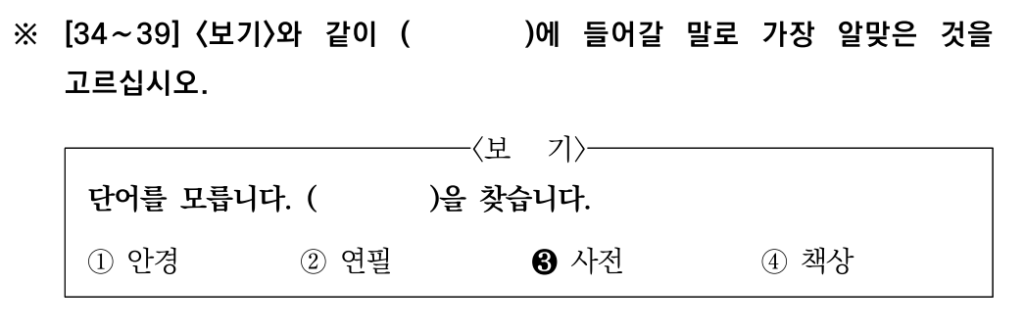
TOPIK Ⅰ Reading [34–39] ①: Noun (Place & Object) Blanks

TOPIK I Reading

📌 Prefer to read in Korean? 한국어로 공부하고 싶어요? 👉 [한국어로 배워요!]

Welcome! 😊

In TOPIK Ⅰ Reading, questions 34–39 ask you to fill in the blank.
Each question is worth 2 points.

These TOPIK Ⅰ Reading questions mix different word types — particles, nouns, verbs, adjectives, and adverbs. So we will study them one type at a time. Today is the first type: noun blanks — especially places and objects.

Try each question first, then open the answer to check.

① Remember just one thing

If the blank is a place or a thing, read the other sentence first.
The activity in that sentence tells you the answer.
e.g. “책을 삽니다 (I buy books)” → Where do you buy books? → 서점 (bookstore)!

② Place & object card

When you see this activity…The answer is this place / thing
돈을 찾다 (get money)은행 (bank)
밥을 먹다 (eat a meal)식당 (restaurant)
책을 사다 (buy books)서점 (bookstore)
책을 빌리다 (borrow books)도서관 (library)
편지·소포를 보내다 (send a letter/parcel)우체국 (post office)
약을 사다 (buy medicine)약국 (pharmacy)
영화를 보다 (watch a movie)극장 (theater)
공부하다 (study)학교 (school)
아프다 (be sick)병원 (hospital)
비가 오다 (it rains) → thing우산 (umbrella)
눈이 나쁘다 (bad eyesight) → thing안경 (glasses)

Practice: TOPIK Ⅰ Reading noun blanks

Try each TOPIK Ⅰ Reading question first.


Read the two sentences, choose the answer, then open the box to check.

Question 1

(       )에 갑니다. 돈을 찾습니다.

① 학교② 은행③ 극장④ 식당


🔽 See the answer (Question 1)

Q: ( )에 갑니다. 돈을 찾습니다. (I go to the ( ). I get money.) 👉 The other sentence: “돈을 찾습니다 (get money)”.

A: ✅② 은행 (bank) → You get money at the bank!

① 학교 (school) = a place to study.

③ 극장 (theater) = a place to watch movies.

④ 식당 (restaurant) = a place to eat.

💡 Tip: get / put money → 은행 (bank)!


Question 2

점심시간입니다. (       )에서 밥을 먹습니다.

① 은행② 서점③ 식당④ 약국


🔽 See the answer (Question 2)

Q: 점심시간입니다. ( )에서 밥을 먹습니다. (It is lunchtime. I eat at the ( ).) 👉 The other sentence: “밥을 먹습니다 (eat a meal)”.

A: ✅③ 식당 (restaurant) → You eat at a restaurant!

① 은행 (bank, money) / ② 서점 (bookstore, books) / ④ 약국 (pharmacy, medicine) = not a place to eat.

💡 Tip: eat a meal → 식당 (restaurant)!


Question 3

(       )에 갑니다. 책을 빌립니다.

① 도서관② 시장③ 공항④ 병원


🔽 See the answer (Question 3)

Q: ( )에 갑니다. 책을 빌립니다. (I go to the ( ). I borrow books.) 👉 The other sentence: “책을 빌립니다 (borrow books)”.

A: ✅① 도서관 (library) → You borrow books at the library!

② 시장 / ③ 공항 / ④ 병원 = not a place to borrow books.

💡 Tip: BUY books → 서점 (bookstore) / BORROW books → 도서관 (library)! (Don’t mix them up.)


Question 4

머리가 아픕니다. (       )에서 약을 삽니다.

① 약국② 학교③ 극장④ 우체국


🔽 See the answer (Question 4)

Q: 머리가 아픕니다. ( )에서 약을 삽니다. (I have a headache. I buy medicine at the ( ).) 👉 The other sentence: “약을 삽니다 (buy medicine)”.

A: ✅① 약국 (pharmacy) → You buy medicine at a pharmacy!

② 학교 / ③ 극장 / ④ 우체국 = not a place to buy medicine.

💡 Tip: buy medicine → 약국 (pharmacy)!


Question 5

비가 많이 옵니다. 그래서 (       )을 씁니다.

① 지갑② 안경③ 우산④ 사전


🔽 See the answer (Question 5)

Q: 비가 많이 옵니다. 그래서 ( )을 씁니다. (It is raining a lot. So I use a ( ).) 👉 The other sentence: “비가 옵니다 (it rains)”.

A: ✅③ 우산 (umbrella) → When it rains, you use an umbrella!

① 지갑 / ② 안경 / ④ 사전 = not for rain.

💡 Tip: it rains → 우산 (umbrella)!


Question 6

눈이 나쁩니다. 그래서 (       )을 씁니다.

① 모자② 안경③ 시계④ 가방


🔽 See the answer (Question 6)

Q: 눈이 나쁩니다. 그래서 (       )을 씁니다. (My eyes are bad. So I wear ( ).) 👉 The other sentence: “눈이 나쁩니다 (bad eyes)”.

A: ✅② 안경 (glasses) → If your eyes are bad, you wear glasses!

① 모자 / ③ 시계 / ④ 가방 = not for your eyes.

💡 Tip: The verb “쓰다” works for umbrella, glasses, AND hat. So don’t look only at “쓰다” — look at the situation: is it rain? or bad eyes?


Question 7

(       )에서 영화를 봅니다. 아주 재미있습니다.

① 극장② 은행③ 서점④ 병원


🔽 See the answer (Question 7)

Q: ( )에서 영화를 봅니다. 아주 재미있습니다. (I watch a movie at the ( ). It is very fun.) 👉 The other sentence: “영화를 봅니다 (watch a movie)”.

A: ✅① 극장 (theater) → You watch movies at a theater!

② 은행 / ③ 서점 / ④ 병원 = not a place to watch movies.

💡 Tip: watch a movie → 극장 (theater)!


Question 8

편지를 씁니다. (       )에서 부칩니다.

① 시장② 우체국③ 학교④ 식당


🔽 See the answer (Question 8)

Q: 편지를 씁니다. ( )에서 부칩니다. (I write a letter. I send it at the ( ).) 👉 The other sentence: “편지를 부칩니다 (send a letter)”.

A: ✅② 우체국 (post office) → You send letters at the post office!

① 시장 / ③ 학교 / ④ 식당 = not a place to send letters.

💡 Tip: send a letter / parcel → 우체국 (post office)!

③ How to memorize the words easily

Now you have practiced, here is the fastest way to grow your TOPIK Ⅰ Reading vocabulary.

  1. Learn activity ↔ place as pairs. (buy books–bookstore, buy medicine–pharmacy) Not one by one.
  2. For each place, say one sentence: “What do you do there?” (bank → “I get money.”)
  3. Read the OTHER sentence first. Look at the sentence without the blank first.
  4. Quiz yourself. See an activity, and say the place. (eat a meal → ?)

🤖Practice with AI

You can practice TOPIK Ⅰ Reading alone with AI.— and grow your Korean speaking too!
This drill trains the main skill of this type: reading the activity and finding the place.
Copy the message below and send it to an AI (like ChatGPT or Claude).

or turn on the AI’s voice (read-aloud). Then answer out loud in Korean. The game is played only in Korean.

🗣️“Please give me a place quiz. Use only in Korean during the game — no English. Give me an activity (for example, ‘책을 삽니다’), and I will say the place (for example, ‘서점’). Then tell me if I am right in Korean. Please keep going with beginner place words.”

⚠️ AI can make mistakes. Always check with real past exams at the end. AI is for practice; the past exams are the answer key.

Summary

  • If the blank is a place or a thing, read the other sentence first.
  • The activity tells you the answer. (buy books → bookstore)
  • For verbs like “쓰다” used in many ways, decide by the situation.

Well done!
Keep practicing, and you can all pass TOPIK Level 2. 🎉
Have a question? Please leave a comment.

See you in the next lesson!

📢 want to practice TOPIKⅠ Listening next? 👉 [ TOPIKⅠ Listening ] 

FAQ

Q: What are TOPIK I reading questions 34–39?

A: You fill a blank with the right word — a particle, noun, verb, adjective, or adverb. Each question is worth 2 points.

Q: How do I choose the right place or object?

A: Read the other sentence. Its activity tells you the answer (책을 삽니다 / buy books → 서점 / bookstore).

Q: Why can the verb 쓰다 have different answers?

A: 쓰다 works for umbrella, glasses, and hat. Don’t pick by the verb alone — decide by the situation (rain? or bad eyes?).